The Fear Machine: How Fear Controls You Now

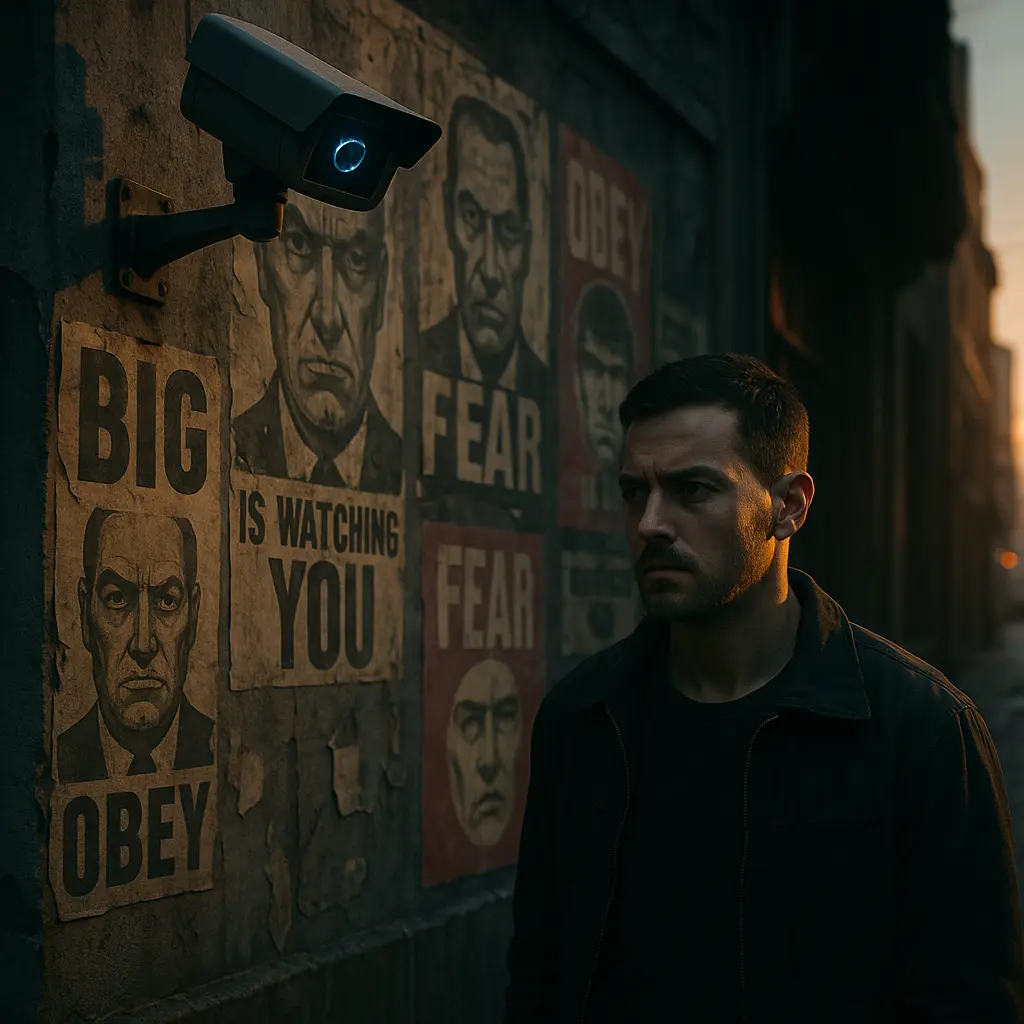
A man walks down a gritty city street lined with surveillance cameras and torn posters as sunlight breaks through clouds, symbolizing awareness breaking free from the fear machine.

“The fear machine does not need to hurt you. It just needs you afraid of what happens if you stop obeying. That fear is the engine that keeps it running.”

TL;DR

  • Fear is the easiest way to control a free person.
  • The fear machine runs on attention and reaction.
  • The more you chase safety, the easier you are to steer.
  • Courage is not the absence of fear. It is awareness through it.
  • Freedom begins when you stop letting fear make your choices.

Fear used to keep us alive. Now it keeps us obedient. It has been industrialized, automated, and broadcast every minute of the day. The fear machine does not care what you believe, only that you keep feeling. Fear sells, it trends, and it trains obedience faster than any rule ever could.

Freedom begins when you stop letting fear make your choices.

“The modern world does not punish you with pain. It punishes you with anxiety.”

Every alert, every headline, every prediction is designed to keep you watching. The fear machine has learned that attention is control. You do not need to be censored when you are too afraid to speak. You do not need to be silenced when you willingly whisper.

Inside the Fear Machine

Fear today is designed, not discovered. Algorithms predict your reactions better than you do. Every post, every video, every breaking alert is tuned to the patterns of your nervous system. The machine studies what you click, how long you pause, and what you avoid. It knows the shape of your anxiety.

That anxiety is not an accident. It is currency. The machine does not need you confident or calm. It needs you uncertain and dependent. Uncertainty keeps you checking. Checking keeps you compliant. You feel informed, but you are really being programmed to wait for the next update.

“The fear machine runs on your imagination. It feeds you worst-case scenarios and lets you finish the story.”

Once fear becomes habit, the machine no longer has to do the work. Your own mind starts filling in the blanks. You call it vigilance. It is conditioning. And it is profitable.

Algorithmic Fear and the Digital Fear Economy

The modern feed is not neutral. It is a marketplace where fear outbids calm. Platforms optimize for engagement, and fear engages fast. That is how a digital fear economy forms. The more you react, the more the machine rewards itself.

It shows up in small ways. Notifications that interrupt meals. Breaking banners that never end. Trending loops that turn concern into habit. If you want a deeper backdrop on how ease becomes control, read Comfort’s Quiet Lie. The short version is simple. When attention is the product, fear is the hook.

The Fear of Safety and Control

The more afraid people become, the more they trade freedom for protection. That trade has been happening quietly for years. Safety has become the new obedience. You agree to tracking, you accept surveillance, you defend censorship, all to stay safe. The machine does not demand loyalty. It sells it as security.

“Control no longer wears a uniform. It wears a warning label.”

Real-world example: A city installs smart cameras for public safety. They start by scanning plates for stolen cars. Within a year they are scanning faces, monitoring protests, and mailing fines to anyone who crosses the wrong zone. The same citizens who cheered the cameras now lower their voices around them. The fear machine did not change the rules. It rewired what people accepted.

Fear promises safety but delivers dependence. You cannot feel free when every decision runs through permission. The fear machine sells protection until you forget how to protect yourself.

Breaking the Reaction Loop

Fear is supposed to be temporary. It warns you of danger so you can act. The machine turned it into a permanent loop. It feeds you just enough panic to keep you reacting instead of rebuilding.

Each reaction teaches the algorithm how to keep you hooked. You give it more data. It learns faster, gets louder, and your calm gets shorter. You see it every day. News feeds that never sleep. HR bulletins that sound like warnings. Schools running lockdown drills that make headlines but do not teach resilience. Eventually you confuse exhaustion with awareness. That is when obedience sneaks in, not from threat, but from fatigue.

“You do not have to be brave to be free. You just have to stop letting fear decide for you.”

The way out is not denial. It is observation. Notice what triggers your fear. Ask who profits from it. When fear stops being an automatic signal, it becomes information. Information gives you choices. Choices rebuild control.

Rebuilding Courage

Courage is not the opposite of fear. It is the ability to see clearly through it. You do not erase fear. You navigate it. Start small. Face something uncomfortable and notice what happens when you do not back down. The fear machine depends on hesitation. Defiance starves it.

“Courage is not loud. It is steady.”

Fear loses its power the moment you act anyway. Action breaks loops. Effort rebuilds confidence. Each time you move forward, the fear machine weakens. You stop waiting for permission and start creating proof of your own ability.

The people who resist control are not fearless. They are tired of wasting time on what-ifs. They trade comfort for clarity and find out they were capable all along. Courage does not remove fear. It puts fear in its proper place, behind you.

Staying Awake in a Fearful World

Fear will always exist, but it does not have to lead. Keep it in your line of sight, not your driver’s seat. The world will keep selling you danger because danger sells control. Your job is to stay awake enough to see the transaction.

“The future does not belong to the fearless. It belongs to those who face fear with clarity.”

Awareness is what turns fear back into information. Once you see the patterns, the fear machine loses leverage. It cannot manipulate someone who notices the strings. That is real independence, not the absence of fear, but the mastery of it.

Every moment you choose action over avoidance, the machine stutters. It needs your reaction to survive. Take that away, and it collapses under its own noise.

Freedom starts in the mind. Light the Fuse.

FAQ

Why is fear such an effective form of control?
Because fear short-circuits reason. It turns people into reactors instead of thinkers, and reaction is predictable.

How can I tell if I am being manipulated by fear?
When a message demands urgency but offers no clear solution, it is not guidance. It is control.

Is fear always bad?
No. Honest fear protects you from real danger. Manufactured fear protects someone else’s power.

What is the first step to breaking fear’s control?
Stop trying to eliminate fear. Watch it. Name it. Once you see it clearly, it cannot own you.

How do I stay courageous when everything feels uncertain?
Do one hard thing every day. Courage grows from momentum, not comfort.


Stay Sharp. Stay Free

No noise. No fluff. Just unfiltered insight on independence, mindset, and critical thought direct from Jason Schaller.

You’ll get:

  • Actionable ideas to reclaim your independence
  • Deep dives into comfort, control, and how to resist both
  • Stories that challenge the systems training you to stop thinking
  • Real frameworks for critical thought and self-reliance

Support & Resources

If you value what I write here, share it. Every repost, mention, and conversation helps spread the spark of independent thought.

Credits and Socials

Connect with Me:
Follow for new articles, behind-the-scenes content, and thought experiments that challenge the system:

Credits:
Original Content by Jason’s Fuse / My Rogue Solutions LLC
Credit: Jason Schaller
Email: jschaller@jasonsfuse.com

About the Author:
Jason Schaller is the creator of Jason’s Fuse — unfiltered thinking on independence, critical thought, and the courage to question everything. He is also the founder of The Rogue Banshee, a former professional gunsmith of 10 years, and a cybersecurity professional with nearly 30 years of experience. He holds some of the top Cybersecurity credentials like the CISSP, CISA and CRISC.

Disclaimers

Content Use & Responsibility
Jason’s Fuse publishes opinion and commentary designed to encourage independent thought. The ideas shared here are for informational and educational purposes only. Readers are encouraged to verify sources, form their own opinions, and apply judgment responsibly.

Affiliate Disclaimer
Some links may be affiliate-based. They cost you nothing but help support the mission of building true independence and critical thought.

Ethics Notice
Opinions expressed are Jason’s own and do not represent any employer or partner organization. All statements are made in good faith based on verified information at the time of writing.
Comfort’s Quiet Lie: Why Ease Is the New Form of Control

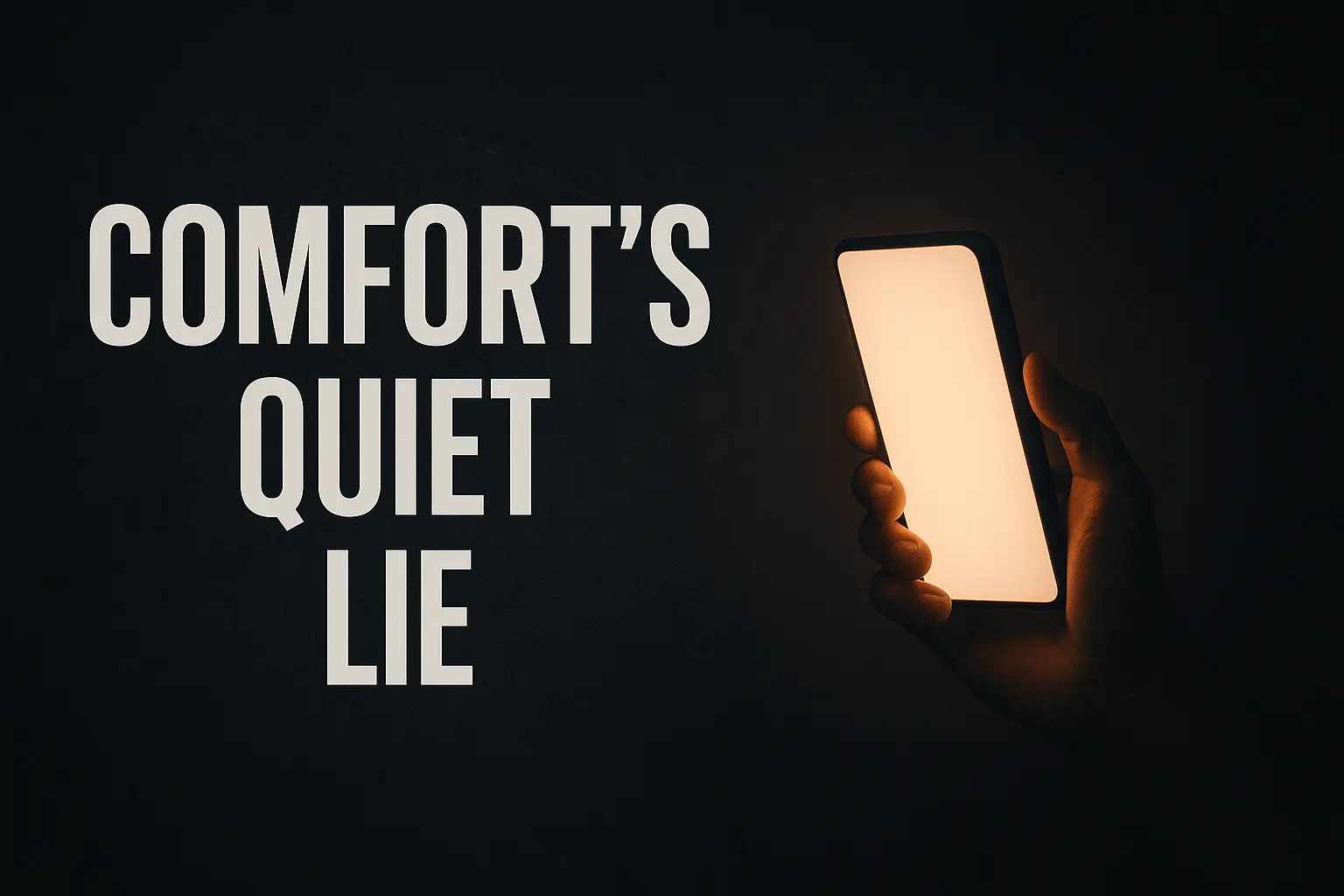
A human hand grips a glowing smartphone in the dark, its light casting soft bars across the fingers symbolizing how comfort becomes a new form of control.

“The system does not have to chain you. It just has to make the chains feel like upgrades. This is the new form of control.”

TL;DR

  • Comfort trains obedience one easy choice at a time.
  • The easier life feels, the less you question who is running it.
  • Ease builds dependency faster than fear ever could.
  • Real freedom starts when you choose effort again.
  • This is the new form of control, and it hides inside convenience.

Convenience was sold as progress. Somewhere in the process, it became control. Every shortcut, every smart feature, every “do not worry, it is automatic” traded awareness for ease. We were told it would save time. What it really saved was the machine’s effort to keep us quiet.

Control used to be blunt. You saw it coming. It wore uniforms and carried authority. Now it smiles, sends you a push notification, and calls itself helpful. You do not have to be forced when you can be guided. You do not have to be watched when you are willing to share everything. The new form of control does not need chains. It just needs your comfort.

Freedom begins when you stop confusing comfort with progress.

“Every time life gets easier, you lose another reason to stay alert.”

Each time something gets easier, you lose a piece of participation. The car drives, the feed recommends, the bill pays itself. It feels efficient until you realize you have stopped noticing the details. That is how control grows. In the silence of your own convenience.

The Illusion of Effortless Living

We were raised to believe that the goal of life is ease. Every update, every device, every app promises relief from effort. But ease is not free. You pay for it with awareness. The less you struggle, the less you stay awake.

People have forgotten how to cook without instructions, navigate without screens, or fix anything without calling support. Tools meant to assist became tools that replaced skill. Once everything became one click away, thinking started to feel like work. That is the cost of effortless living. You forget how to engage.

“When everything becomes automatic, awareness becomes optional.”

Comfort does not look like control. It looks like kindness. It tells you it is helping. It tells you that you have earned rest. But when the structures you depend on stop working, you find out how much of your independence was rented, not owned.

The New Form of Control

The old rulers demanded obedience. The new ones design it. They do not need threats. They have algorithms. The machine does not silence you anymore. It distracts you.

Every “helpful” feature studies your behavior. It learns how long you pause, what you avoid, and what keeps you scrolling. It gets to know you better than you know yourself. Predictability is the modern leash. You move exactly how it expects you to, and you think it is your choice.

“Control today does not feel like fear. It feels like comfort.”

Real-world example: Think about your smart home stack. Your thermostat learns your habits, lowers the bill a little, and shares data upstream. Your lights, locks, and speakers tie into subscriptions that quietly auto-renew. You get daily comfort. In exchange, the platform earns daily certainty about you. That certainty is power. You call it convenience. It is compliance with a friendly interface.

The result is quiet, polite submission. You do not need to agree with propaganda when you depend on the platform. You do not need to believe the narrative when it owns your attention. Habit is the cleanest form of control, and habit is built by ease.

What You Trade for Comfort

Every time you save time, ask what you are actually saving it for. Most people spend it on distraction. The minutes you gained become ads, noise, and content loops. That is not saving time. That is spending life in smaller pieces.

“Convenience always comes with fine print. It is written in skills you forget to use.”

Each upgrade whispers the same deal: we will handle it, you just relax. And you do. You stop reading the fine print. You stop questioning the trade. The more you accept, the less you engage. The more you depend, the less you remember. Awareness fades. Control tightens. This is how a new form of control hides in plain sight.

You tell yourself you are too busy to care. That is the lie comfort tells. You are not too busy. You are sedated. The good news is you can wake up. The first symptom of recovery is discomfort.

Reclaiming Effort

You do not have to throw away your tools. You just have to stop serving them. Do something difficult on purpose. Cook from memory. Read something long without checking your phone. Repair something by hand. The awkwardness you feel is proof that the muscle still works.

“Discomfort is not punishment. It is proof you are paying attention again.”

Effort is not punishment. It is ownership. Every time you do something for yourself, you take back control from the structures that want to do it for you. The more you practice independence, the less useful manipulation becomes.

There is a difference between rest and sedation. Rest restores you because you earned it. Sedation sells you because you are too tired to resist it. Earned comfort strengthens your spine. Unquestioned comfort softens it.

If you want a place to start, pick one domain and reclaim it. Make the meal. Plan a route without the map for a simple drive. Turn off auto-renew and decide, on purpose, which subscriptions still earn their keep. Small frictions rebuild attention. Rebuilt attention restores freedom.

Freedom Through Friction

Freedom has always required effort. The moment it stops costing something, it stops being real. The machine rewards ease because ease keeps you predictable. The people who stay alert, who stay curious, who keep doing things the hard way are always the hardest to control.

“The future does not belong to the comfortable. It belongs to the awake.”

Ask yourself where you have gone on autopilot. That is where awareness disappeared. Do not destroy comfort. Inspect it. See what it is hiding. Then decide what you want to rebuild by hand. Every task you reclaim, every shortcut you refuse, restores a piece of your independence.

Comfort is not the enemy. Unconscious comfort is. The goal is not hardship. The goal is awareness. Each time you choose effort, you step outside the algorithm and back into your own life.

Freedom starts in the mind. Light the Fuse.

FAQ

Why is comfort dangerous?
Because it replaces awareness with automation. You forget what you used to know.

Is all comfort bad?
No. Earned comfort gives you rest. Unquestioned comfort takes your edge.

What is one sign you are under control?
When you stop asking who benefits from your convenience. If the answer is not you, look closer.

How can I take back control?
Do one thing today that feels difficult. That discomfort means you are alive again. Add one more tomorrow.

How do I stay free in a comfortable world?
Keep thinking. Keep fixing. Keep paying attention. Let comfort follow effort, not replace it.

Stay Sharp. Stay Free

No noise. No fluff. Just unfiltered insight on independence, mindset, and critical thought direct from Jason Schaller.

You’ll get:

  • Actionable ideas to reclaim your independence
  • Deep dives into comfort, control, and how to resist both
  • Stories that challenge the systems training you to stop thinking
  • Real frameworks for critical thought and self-reliance

Support & Resources

If you value what I write here, share it. Every repost, mention, and conversation helps spread the spark of independent thought.

Credits and Socials

Connect with Me:
Follow for new articles, behind-the-scenes content, and thought experiments that challenge the system:

Credits:
Original Content by Jason’s Fuse / My Rogue Solutions LLC
Credit: Jason Schaller
Email: jschaller@jasonsfuse.com

About the Author:
Jason Schaller is the creator of Jason’s Fuse — unfiltered thinking on independence, critical thought, and the courage to question everything. He is also the founder of The Rogue Banshee, a former professional gunsmith of 10 years, and a cybersecurity professional with nearly 30 years of experience. He holds some of the top Cybersecurity credentials like the CISSP, CISA and CRISC.

Disclaimers

Content Use & Responsibility
Jason’s Fuse publishes opinion and commentary designed to encourage independent thought. The ideas shared here are for informational and educational purposes only. Readers are encouraged to verify sources, form their own opinions, and apply judgment responsibly.

Affiliate Disclaimer
Some links may be affiliate-based. They cost you nothing but help support the mission of building true independence and critical thought.

Ethics Notice
Opinions expressed are Jason’s own and do not represent any employer or partner organization. All statements are made in good faith based on verified information at the time of writing.