Independent Thinking: How to Think Free When the World Stops

Independent Thinking title graphic with bold distressed text on a dark textured background.

“Independent thinking is not rebellion for attention. It is awareness in motion, the work of staying awake when the world powers down.”

TL;DR

  • Independent thinking is the foundation of freedom.
  • The world rewards reaction, not reflection.
  • Clarity starts when you slow down and question habits.
  • Discipline protects your mind from outside control.
  • Awareness builds independence one deliberate choice at a time.
Independent thinking is the quiet rebellion most people never commit to. Every platform pushes you to react fast. Every algorithm rewards the loudest response. The pace leaves no room for clarity, and without clarity, obedience feels like reason.

Thinking for yourself means pausing when everyone else rushes. That pause changes everything. It’s the break that resets your mind and reveals how often your opinions are rented, not earned.

“You cannot steer someone who keeps asking questions.”

Independent thinking is not a personality trait. It is a skill, trained through friction and time. The world sells simplicity and calls it progress, but ease kills depth. Slowness is how you reclaim your own thought process. The moment you ask who benefits from your agreement, you begin to think free.

Why It Matters

When you stop thinking independently, you stop living consciously. Most of what passes for awareness today is a loop of recycled outrage. People defend sides they never questioned. They echo the loudest source instead of testing the idea. Freedom dies quietly inside that routine, and most never notice until silence feels safer than truth.

The Conditioning of Obedient Thought

“The world does not steal your thoughts. It convinces you to stop using them.”

From the start, you are trained to comply. Schools reward recall, not reasoning. Work rewards silence, not curiosity. Platforms reward anger, not understanding. The pattern repeats until obedience feels like cooperation and comfort feels like progress.

How the Pattern Hides

Modern conditioning disguises itself as help. Autofill finishes your sentence while recommendations finish your curiosity. Shortcuts finish your patience. Each assist saves seconds but drains awareness. With time, you forget what effort feels like. You stop noticing how often you accept what’s given to you.

Convenience is control wearing a friendly face. When everything runs smoothly, you forget to ask who’s steering it. You think you are saving time, yet you are only saving the system effort. The more you rely on it, the less you participate in your own life.

Independent Thinking Breaks the Loop

You break conditioning by adding friction on purpose. Read one long article without checking comments. Finish a book without multitasking. Question why a story exists before deciding if it’s true. Each small act of resistance rebuilds control over your mind. Freedom of thought grows one deliberate pause at a time.

The Discipline Behind Independence

“Freedom of mind is not emotion. It is maintenance.”

Independent thinking requires discipline, not defiance. It’s the decision to stay curious even when you are tired, to verify when everyone else reacts. That work is slow, but slow thinking builds durable awareness. Most people choose quick comfort instead. They scroll, skim, and nod along. It feels productive. It isn’t.

Boundaries Create Clarity

Discipline starts with your inputs. Set boundaries for what earns your attention. Read before you scroll. Write before you share. Listen before you respond. Boundaries slow the loop and give your mind time to work. The longer you wait before reacting, the clearer your next thought becomes.

Friction Builds Strength

Effort creates understanding. Each time you learn a skill from scratch or unpack an idea by yourself, you strengthen independence. The world will call it inefficient. That’s fine. Efficiency without awareness is just automation. True clarity takes patience, and patience always looks like resistance to the impatient.

Questions That Keep You Free

  • What do I actually know?
  • Who benefits from my agreement?
  • What’s missing from this frame?
  • What would make me change my mind?

These questions are a mental firewall. Use them daily. They protect you from narratives built to steer you.

When I Lost My Own Thinking

“The crowd will always cheer for the predictable version of you.”

When my channel started growing, I mistook attention for achievement. The algorithm rewarded what it already liked, so I repeated it. The rhythm felt like progress, yet it was drift. The more I optimized, the less I questioned. The machine wasn’t silencing me, it was rewarding my obedience.

The Drift

I built content that fit a mold. Brands shaped tone. Analytics shaped decisions. Creativity turned into calibration. It looked successful on paper, but it felt empty. I had stopped thinking. I was producing, not teaching. Growth had become a trap built out of my own compliance.

The Return

I pulled back and started rebuilding from the core. I made videos that felt right, even when they broke the algorithm’s rhythm. The numbers fell, and the algorithm was confused. The YouTube analytics couldn’t tell me what my audience watched outside of my content (yes YouTube does that, creeped out yet?). That’s the trade independent thinking demands, clarity instead of applause. Once you taste that kind of freedom, you stop caring about approval metrics.

Independent thinking saved the work. It is turning my channel back into a craft instead of a performance. That lesson holds for anyone who’s ever lost themselves chasing numbers. Freedom starts the moment you choose honesty over validation.

Rebuilding Mental Independence

“Awareness is a muscle. It strengthens when used and fades when ignored.”

You don’t need to change your life to regain independence, you just need to change your rhythm. Rebuilding starts small. One choice. One deliberate act of attention. Over time, those acts add up and become a mindset that resists manipulation.

Daily Practice

  • Read long on purpose. Finish one full piece without switching tasks.
  • Write before you share. Express your view, then verify it.
  • Wait before reacting. Time exposes emotional traps.
  • Audit your inputs. Replace noise with original sources.
  • Challenge yourself. Argue your own beliefs in reverse.

Weekly Practice

  • Pick one hard topic. Research it, teach it, and summarize it in plain language.
  • Take one media-free evening. Build something tangible or think without stimulus.
  • Repair one thing you own. Skill builds confidence, and confidence silences noise.

Track It

Keep a simple record of what changes your mind. Write the date, topic, and trigger. Over months, you’ll see proof that you can evolve on purpose. That confidence is what independent thinking builds. It’s not rebellion. It’s refinement.

Clarity as Rebellion

“Clarity will make you an outsider. Stay there.”

The world runs on confusion because confusion sells guidance. When you start seeing clearly, you stop needing permission. You ask better questions and act from purpose, not panic. That’s the kind of rebellion that scares systems because they can’t effentiently monetize awareness.

Why It Matters

Clarity replaces panic with understanding. So, when you think for yourself, fear loses leverage and you make decisions that align with your values, not the crowd’s. Calm thinkers are the hardest people to control. And that’s why independent thinking isn’t taught. It’s rediscovered.

How to Hold the Line

  • Choose depth over speed. A missed trend isn’t a loss.
  • Speak after you understand, not before.
  • Keep friends who challenge you without hostility.
  • Rest intentionally. Tired minds obey faster.

What Changes When You Think Free

You stop asking for permission to understand, stop mistaking volume for value and you sure as hell stop treating outrage as proof. Instead, you start observing before deciding and start living aligned with logic and integrity. That is freedom in motion so get your ass in gear and start thinking for yourself.

Freedom starts in the mind. Light the Fuse.

FAQ

“Independent thinking is awareness with backbone.”

What is independent thinking?
It’s the ability to reason without outsourcing judgment to trends, politics, or algorithms.

Why is it rare?
Because the world rewards speed over depth. Thinking takes time, and time feels expensive.

How do I rebuild it?
Insert friction. Read long. Write first. Share later. Audit your inputs and test your own beliefs.

Does it mean isolation?
No. It means ownership. You can learn from anyone while staying mentally independent.

What should I do today?
Unplug for one hour. Read something difficult. Write a paragraph about what you believe and why. Keep it for yourself.
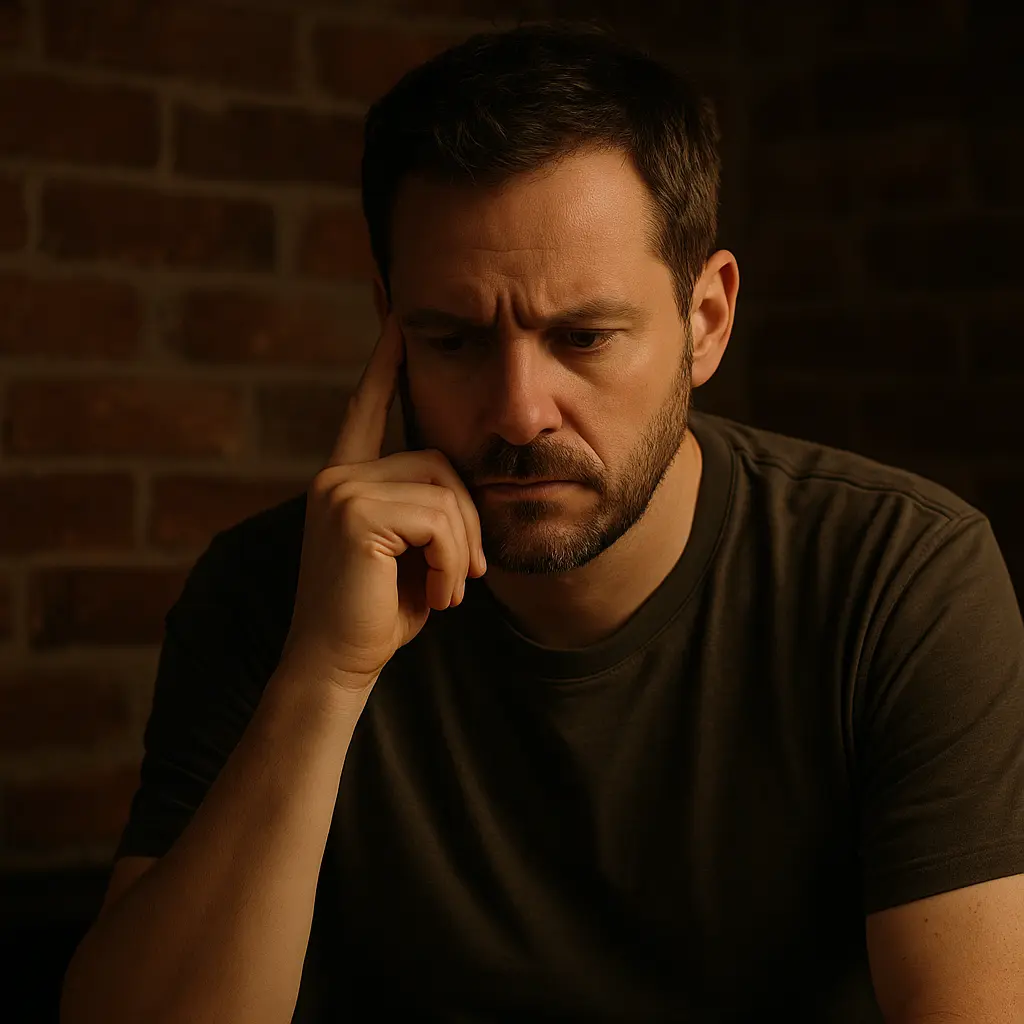
Why Thinking For Yourself Is The New Rebellion

A man sits in deep thought against a dimly lit brick wall, symbolizing independent thinking and quiet rebellion.

“The rebellion isn’t about noise or outrage, and unfortunately the first battle is to reclaim the thoughts in your head. You need to start thinking for yourself!”


TL;DR

  • Comfort hides control, and ease trains you to stop thinking.
  • Waking up feels like loss. The friction you feel is withdrawal, not weakness.
  • Freedom starts with small daily acts of independent thought.
  • Rebellion today is not chaos. It is clarity.
  • In a world built to keep you scrolling, independence isn’t loud. It’s rare.

At night the blue light from a phone screen turns every face the same color. The glow feels safe, hypnotic, familiar. You promise yourself five more minutes. An hour later, your thumb moves on its own. That’s not entertainment. That’s conditioning.

Every day the web sells ideas prepackaged and polished. Scroll for a minute and you’ll find slogans about independence from people who haven’t practiced it in years. Most of what passes for free thought is just recycled outrage. The system doesn’t need to force anyone to conform anymore. It only needs to keep you entertained long enough to forget what thinking feels like.

Real rebellion doesn’t start with noise. It starts when you stop echoing and begin examining what’s inside your own head.

How Comfort Became Control

Control used to look obvious, with orders, uniforms, and rules. Now it looks friendly. It feels like convenience. The easier life becomes, the less we question who built that comfort.

You don’t have to swear loyalty to anyone to lose your independence. All it takes is a slow drift into ease. Skip the hard reading. React before reflecting. Accept what’s popular because it’s faster than asking questions. Every small surrender trains the mind to prefer comfort over clarity.

You keep your mouth shut when the policy is garbage because you need that paycheck. You nod along in training you don’t believe because it’s easier than being labeled a problem. That’s not peace. That’s quiet obedience.

I’ve watched smart people trade judgment for simplicity. I’ve seen meetings where nobody challenges the plan because silence feels safer than dissent. That’s how comfort wins. It hides the cost of obedience behind the illusion of peace.

Once you notice it, you can’t go back.
And once you stop pretending, the walls start to crack.
That’s when you’ve taken the red pill, and there’s no going back into the Matrix.

The first taste of truth feels clean. Then it hits you. The cravings start. The noise calls you back. Your brain wants the scroll, the dopamine, the next easy hit of validation. The system doesn’t have to chase you. It only needs to wait for the withdrawal to break you.

That’s how control survives. It doesn’t cage you; it makes you miss the cage.
You end up defending the thing that’s draining you.

Why Waking Up Feels Like Loss

The moment you start questioning everything, you lose more than illusions. You lose belonging. Friends who liked the old version of you will label the new one difficult. They’ll tell you to relax or stop being negative. What they mean is, “don’t make me think too.”

That’s the price of clarity. When you wake up, you see how many of your decisions were built on someone else’s agenda: advertising, politics, and trends disguised as values. It’s uncomfortable to admit how often you played along. But honesty only hurts once.

I remember the first time I stopped agreeing to keep the peace. I didn’t lose the argument. I lost the room.

That silence taught me what independence really costs.

You’ll watch people smile to your face and call you difficult in the group chat because you wouldn’t lie with them. That’s the tax.

“The system doesn’t silence you. It just wears you down until you stop fighting.”

Every rebel faces that fatigue. It’s the test that separates curiosity from conviction. Push through it. That’s where your real backbone grows.

Once you’ve lost the illusion of belonging, what’s left is silence. That’s where you start hearing your own thoughts again. And when that happens, you realize how long it’s been since you trusted them.

Sometimes thinking for yourself means sleeping worse for a while, eating alone at lunch, and being the villain in someone else’s story. It isn’t glamorous. It’s lonely. But that’s the toll you pay before you get your self-respect back.

The Friction That Proves You’re Alive

Independent thought never feels smooth. The first time you trust your own judgment, it shakes you. The world around you keeps insisting you’re wrong. That tension isn’t a flaw. It’s feedback. It proves you still control your own mind.

Most people run from that friction. They scroll, distract, or medicate until the noise buries it. Don’t run. Stay with it. Focusing on the discomfort is how you build control. Friction means growth. It’s the moment you recognize where your real boundaries are.

It’s no different from addiction. Once you get off the bottle, the pills, or the needle, your body starts screaming for what used to control it. Your mind does the same thing.

The second you stop feeding it constant distraction, it begs for another hit of comfort.

That pain isn’t weakness. It’s withdrawal.
And that’s the proof you’re breaking free from something that owned you.

Congratulations. That’s you taking your brain back from whoever was renting it.

“If thinking hurts, it’s because you’ve stopped numbing yourself.”

That discomfort is your edge returning. Keep it sharp.

The Few Who Keep Going

Once you learn to handle the friction, the next test is endurance. Every movement begins with a handful of people who refuse to stop thinking. They aren’t loud or dramatic; they’re disciplined. They ask better questions. They verify before they share. They keep integrity intact even when it costs attention.

I teach people how to tear down and rebuild their own gear. This is the same thing, just for your head.

At first, the world laughs at them. Then it imitates them. That’s how every shift begins. The first few carry the weight until everyone else pretends they were there from the start.

If that’s you, stay steady. The early miles feel lonely, but solitude is part of the work.

Rebellion doesn’t need a crowd. It needs commitment.

Real rebellion spreads by example, not explosion.

What Freedom Really Demands

Comfort trades silence for safety. It rewards compliance with predictability. That bargain drains the life out of you.

Freedom costs more. It asks you to think when it’s inconvenient, to act when it’s unpopular, to stand straight when everyone else bends. It won’t thank you for doing it. But it will hand your mind back, clean and untethered.

“Freedom asks for your courage and gives your mind back in return.”

Most people will never make that trade. They’ll keep renting their thoughts to whoever pays them in likes. You don’t owe them company.

Start small. Question one belief you’ve carried for years. Research something before repeating it. Say what you truly think once this week. Turn off auto-play once tonight and sit in the quiet for five minutes. If that silence feels uncomfortable, that’s the cage we’re talking about.

These are small acts of rebellion, but they’re the kind that last.

Rebellion today isn’t chaos. It’s clarity.
Light the fuse.

FAQ

Why does thinking for yourself matter so much today?
Because most people outsource their opinions to algorithms and trends. Thinking for yourself forces awareness, and awareness is power.

Is it exhausting to question everything?
It can be. But blind comfort drains you faster. Real thinking builds endurance and keeps your mind sharp enough to handle truth.

What’s the first step to independent thought?
Start small. Pause before reacting. Ask “why” once a day and don’t move on until you have an honest answer.

How can I stay independent without becoming isolated?
You’ll lose some company, but you’ll attract better company. Look for people who value truth more than convenience.

How can I tell if I’m truly free-minded?
When you can challenge your own beliefs without fear or ego. That’s not rebellion against others. It’s mastery over yourself.

Light the fuse. Reclaim your thoughts. Live free.


Stay Sharp. Stay Free

No noise. No fluff. Just unfiltered insight on independence, mindset, and critical thought direct from Jason Schaller.

You’ll get:

  • Actionable ideas to reclaim your independence
  • Deep dives into comfort, control, and how to resist both
  • Stories that challenge the systems training you to stop thinking
  • Real frameworks for critical thought and self-reliance

Support & Resources

If you value what I write here, share it. Every repost, mention, and conversation helps spread the spark of independent thought.

Credits and Socials

Connect with Me:
Follow for new articles, behind-the-scenes content, and thought experiments that challenge the system:

Credits:
Original Content by Jason’s Fuse / My Rogue Solutions LLC
Credit: Jason Schaller
Email: jschaller@jasonsfuse.com

About the Author:
Jason Schaller is the creator of Jason’s Fuse — unfiltered thinking on independence, critical thought, and the courage to question everything. He is also the founder of The Rogue Banshee, a former professional gunsmith of 10 years, and a cybersecurity professional with nearly 30 years of experience. He holds some of the top Cybersecurity credentials like the CISSP, CISA and CRISC.

Disclaimers

Content Use & Responsibility
Jason’s Fuse publishes opinion and commentary designed to encourage independent thought. The ideas shared here are for informational and educational purposes only. Readers are encouraged to verify sources, form their own opinions, and apply judgment responsibly.

Affiliate Disclaimer
Some links may be affiliate-based. They cost you nothing but help support the mission of building true independence and critical thought.

Ethics Notice
Opinions expressed are Jason’s own and do not represent any employer or partner organization. All statements are made in good faith based on verified information at the time of writing.