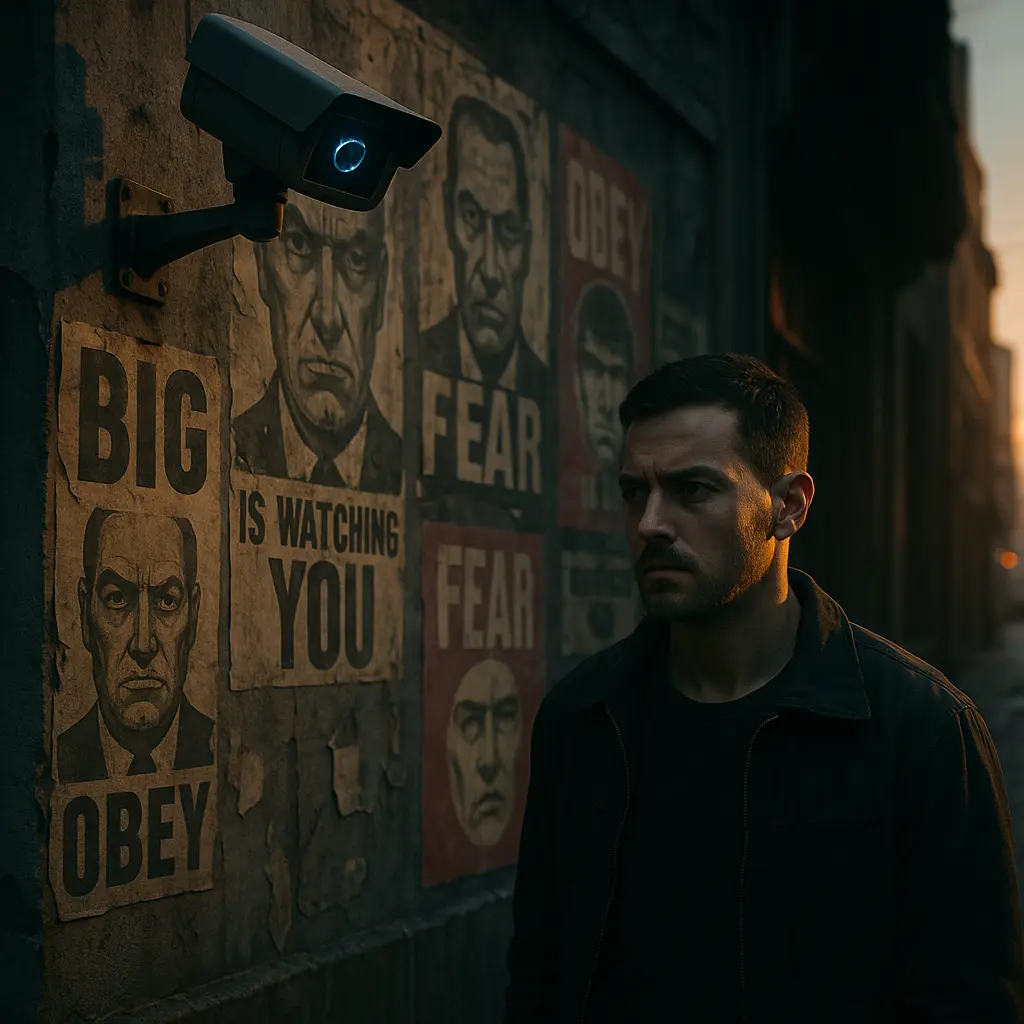
The Fear Machine: How Fear Controls You Now

A man walks down a gritty city street lined with surveillance cameras and torn posters as sunlight breaks through clouds, symbolizing awareness breaking free from the fear machine.

“The fear machine does not need to hurt you. It just needs you afraid of what happens if you stop obeying. That fear is the engine that keeps it running.”

TL;DR

  • Fear is the easiest way to control a free person.
  • The fear machine runs on attention and reaction.
  • The more you chase safety, the easier you are to steer.
  • Courage is not the absence of fear. It is awareness through it.
  • Freedom begins when you stop letting fear make your choices.

Fear used to keep us alive. Now it keeps us obedient. It has been industrialized, automated, and broadcast every minute of the day. The fear machine does not care what you believe, only that you keep feeling. Fear sells, it trends, and it trains obedience faster than any rule ever could.

Freedom begins when you stop letting fear make your choices.

“The modern world does not punish you with pain. It punishes you with anxiety.”

Every alert, every headline, every prediction is designed to keep you watching. The fear machine has learned that attention is control. You do not need to be censored when you are too afraid to speak. You do not need to be silenced when you willingly whisper.

Inside the Fear Machine

Fear today is designed, not discovered. Algorithms predict your reactions better than you do. Every post, every video, every breaking alert is tuned to the patterns of your nervous system. The machine studies what you click, how long you pause, and what you avoid. It knows the shape of your anxiety.

That anxiety is not an accident. It is currency. The machine does not need you confident or calm. It needs you uncertain and dependent. Uncertainty keeps you checking. Checking keeps you compliant. You feel informed, but you are really being programmed to wait for the next update.

“The fear machine runs on your imagination. It feeds you worst-case scenarios and lets you finish the story.”

Once fear becomes habit, the machine no longer has to do the work. Your own mind starts filling in the blanks. You call it vigilance. It is conditioning. And it is profitable.

Algorithmic Fear and the Digital Fear Economy

The modern feed is not neutral. It is a marketplace where fear outbids calm. Platforms optimize for engagement, and fear engages fast. That is how a digital fear economy forms. The more you react, the more the machine rewards itself.

It shows up in small ways. Notifications that interrupt meals. Breaking banners that never end. Trending loops that turn concern into habit. If you want a deeper backdrop on how ease becomes control, read Comfort’s Quiet Lie. The short version is simple. When attention is the product, fear is the hook.

The Fear of Safety and Control

The more afraid people become, the more they trade freedom for protection. That trade has been happening quietly for years. Safety has become the new obedience. You agree to tracking, you accept surveillance, you defend censorship, all to stay safe. The machine does not demand loyalty. It sells it as security.

“Control no longer wears a uniform. It wears a warning label.”

Real-world example: A city installs smart cameras for public safety. They start by scanning plates for stolen cars. Within a year they are scanning faces, monitoring protests, and mailing fines to anyone who crosses the wrong zone. The same citizens who cheered the cameras now lower their voices around them. The fear machine did not change the rules. It rewired what people accepted.

Fear promises safety but delivers dependence. You cannot feel free when every decision runs through permission. The fear machine sells protection until you forget how to protect yourself.

Breaking the Reaction Loop

Fear is supposed to be temporary. It warns you of danger so you can act. The machine turned it into a permanent loop. It feeds you just enough panic to keep you reacting instead of rebuilding.

Each reaction teaches the algorithm how to keep you hooked. You give it more data. It learns faster, gets louder, and your calm gets shorter. You see it every day. News feeds that never sleep. HR bulletins that sound like warnings. Schools running lockdown drills that make headlines but do not teach resilience. Eventually you confuse exhaustion with awareness. That is when obedience sneaks in, not from threat, but from fatigue.

“You do not have to be brave to be free. You just have to stop letting fear decide for you.”

The way out is not denial. It is observation. Notice what triggers your fear. Ask who profits from it. When fear stops being an automatic signal, it becomes information. Information gives you choices. Choices rebuild control.

Rebuilding Courage

Courage is not the opposite of fear. It is the ability to see clearly through it. You do not erase fear. You navigate it. Start small. Face something uncomfortable and notice what happens when you do not back down. The fear machine depends on hesitation. Defiance starves it.

“Courage is not loud. It is steady.”

Fear loses its power the moment you act anyway. Action breaks loops. Effort rebuilds confidence. Each time you move forward, the fear machine weakens. You stop waiting for permission and start creating proof of your own ability.

The people who resist control are not fearless. They are tired of wasting time on what-ifs. They trade comfort for clarity and find out they were capable all along. Courage does not remove fear. It puts fear in its proper place, behind you.

Staying Awake in a Fearful World

Fear will always exist, but it does not have to lead. Keep it in your line of sight, not your driver’s seat. The world will keep selling you danger because danger sells control. Your job is to stay awake enough to see the transaction.

“The future does not belong to the fearless. It belongs to those who face fear with clarity.”

Awareness is what turns fear back into information. Once you see the patterns, the fear machine loses leverage. It cannot manipulate someone who notices the strings. That is real independence, not the absence of fear, but the mastery of it.

Every moment you choose action over avoidance, the machine stutters. It needs your reaction to survive. Take that away, and it collapses under its own noise.

Freedom starts in the mind. Light the Fuse.

FAQ

Why is fear such an effective form of control?
Because fear short-circuits reason. It turns people into reactors instead of thinkers, and reaction is predictable.

How can I tell if I am being manipulated by fear?
When a message demands urgency but offers no clear solution, it is not guidance. It is control.

Is fear always bad?
No. Honest fear protects you from real danger. Manufactured fear protects someone else’s power.

What is the first step to breaking fear’s control?
Stop trying to eliminate fear. Watch it. Name it. Once you see it clearly, it cannot own you.

How do I stay courageous when everything feels uncertain?
Do one hard thing every day. Courage grows from momentum, not comfort.


Stay Sharp. Stay Free

No noise. No fluff. Just unfiltered insight on independence, mindset, and critical thought direct from Jason Schaller.

You’ll get:

  • Actionable ideas to reclaim your independence
  • Deep dives into comfort, control, and how to resist both
  • Stories that challenge the systems training you to stop thinking
  • Real frameworks for critical thought and self-reliance

Support & Resources

If you value what I write here, share it. Every repost, mention, and conversation helps spread the spark of independent thought.

Credits and Socials

Connect with Me:
Follow for new articles, behind-the-scenes content, and thought experiments that challenge the system:

Credits:
Original Content by Jason’s Fuse / My Rogue Solutions LLC
Credit: Jason Schaller
Email: jschaller@jasonsfuse.com

About the Author:
Jason Schaller is the creator of Jason’s Fuse — unfiltered thinking on independence, critical thought, and the courage to question everything. He is also the founder of The Rogue Banshee, a former professional gunsmith of 10 years, and a cybersecurity professional with nearly 30 years of experience. He holds some of the top Cybersecurity credentials like the CISSP, CISA and CRISC.

Disclaimers

Content Use & Responsibility
Jason’s Fuse publishes opinion and commentary designed to encourage independent thought. The ideas shared here are for informational and educational purposes only. Readers are encouraged to verify sources, form their own opinions, and apply judgment responsibly.

Affiliate Disclaimer
Some links may be affiliate-based. They cost you nothing but help support the mission of building true independence and critical thought.

Ethics Notice
Opinions expressed are Jason’s own and do not represent any employer or partner organization. All statements are made in good faith based on verified information at the time of writing.
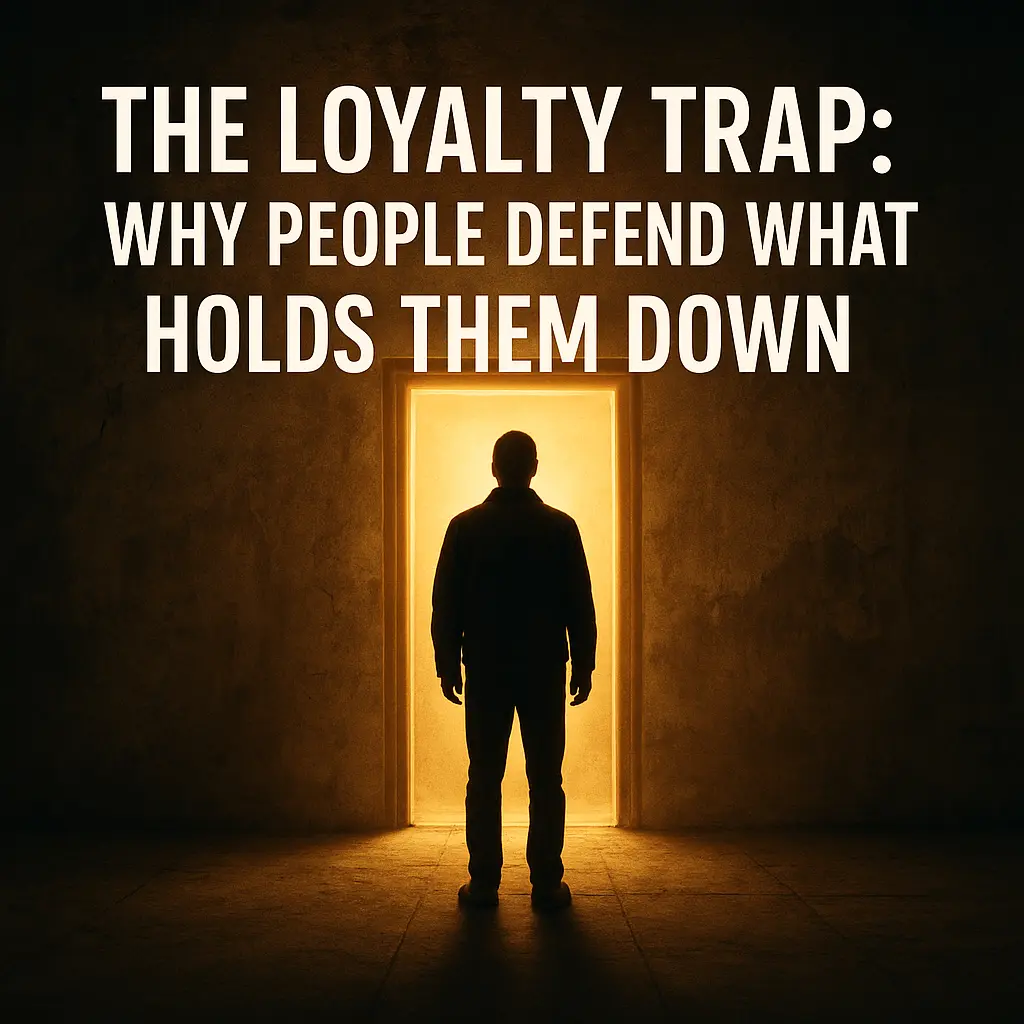
The Loyalty Trap: Why People Defend What Holds Them Down

A person stands in a dim industrial hallway facing a glowing doorway, symbolizing awareness and freedom from the loyalty trap. Shadows behind them form faint chains, representing control and obedience.

“The structure never needed everyone to believe in it. It only needed enough people to defend it. That is the loyalty trap.”

TL;DR

  • Control survives because people protect it.
  • Most loyalty is trained, not earned.
  • Fear of change feels safer than freedom.
  • Obedience hides behind the word “normal.”
  • The hardest chains to break are the ones you volunteer to wear.

People rarely notice when they start defending their own cage. They call it stability, maturity, being realistic. They protect the order that keeps them small because comfort makes compliance feel noble. That is the loyalty trap. The machine does not ask for your faith. It asks for your repetition.

Freedom begins when you stop defending control.

“Control does not need believers. It needs enforcers who think they are protecting peace.”

Most people would rather be told what is true than find out for themselves. Thinking hurts. Doubt creates tension. Certainty feels like rest. The machine sells that rest in familiar forms: policy, procedure, culture, brand identity. Anything that keeps the gears turning without friction will do.

Over time, that rhythm becomes comfortable. You learn what to say, what to hide, what earns approval. The repetition feels safe because it gives you belonging. Before long, you start defending the very thing that limits you. It feels noble to protect what’s familiar, even when that familiarity costs you freedom.

The Birth of Obedience

Obedience rarely begins with threats. It begins with small rewards. The pat on the head for fitting in. The bonus for staying quiet. The comfort of being called a team player. The lesson sinks in quickly: keep the peace and you will be fine.

We mistake approval for respect. Once you taste the ease of acceptance, questioning feels like betrayal. That is how loyalty is built — not through trust, but through convenience. The habit becomes reflex. You learn what earns smiles and what earns silence. In time, silence feels safer than truth.

“The moment you trade truth for belonging, you start guarding the lie.”

When someone challenges the rules, the group reacts like a wounded animal. The pushback is instant because the structure defends itself through its members. People protect the comfort that shields them from thinking. It feels easier to call a dissenter a problem than to face what they expose.

This plays out everywhere — offices, communities, families. In one company I worked with, employees were told every Friday to post “We’re all one team!” on the internal chat. Anyone who didn’t got flagged for “engagement coaching.” That’s not unity. That’s conditioning. The practice wasn’t about connection. It was about monitoring who still believed.

Manufactured Loyalty

The machine rewards small obedience. Show up. Do not ask. Repeat. Those who play along rise just enough to feel successful, but never enough to be free. The illusion of progress keeps them loyal. Promotions, perks, and titles become currency in a market of quiet control.

Control no longer needs guards. It has users, fans, and employees who enforce compliance for free. Algorithms do not police thought; people do. They repeat slogans, defend policies, and shame anyone who questions them. They do it out of pride, not fear, which makes the loyalty even stronger.

“Modern loyalty is not love. It is dependency dressed as duty.”

When you rely on the structure for safety, you will defend it against anyone who threatens it — even when it is the thing holding you down. The paycheck, the title, the reputation all depend on staying useful to control. Most people would rather keep the illusion than risk standing alone.

What looks like dedication is often dependence. Once you see that, you start recognizing loyalty everywhere: people praising jobs that drain them, defending rules they despise, clinging to routines that keep them numb. It is not belief. It is survival disguised as virtue.

Why Truth Feels Like Betrayal

When you finally wake up, the first shock is not the truth itself. It is the silence that follows. The moment you stop pretending, you hear how loud conformity was. You notice how often people talk just to keep peace, how rarely anyone says what they mean.

That silence cuts deeper than any argument. People do not hate the truth because it is wrong. They hate it because it requires work. It forces them to rethink who they are without the structure they defended. The truth dismantles identity, and that feels personal.

“Freedom hurts at first because you lose the comfort of excuses.”

Waking up can feel like betrayal. You stop echoing what made you belong. You stop nodding in meetings, stop reposting the approved opinions, stop laughing at things you don’t believe. The crowd pulls away, and the distance feels heavy. But that isolation is proof you’ve stopped trading yourself for acceptance.

Every movement toward independence carries a cost. The moment you stop feeding the illusion, the machine starves you of comfort. But clarity replaces the hunger quickly. You learn to live on truth instead of approval. That is how freedom grows — one uncomfortable moment at a time.

Breaking the Loyalty Loop

You cannot argue people out of obedience. You can only model freedom. Quiet consistency breaks illusions faster than outrage. When people see you stand alone and stay calm, they start asking why. That is how cracks form in the wall.

Start small. Question one habit a day. Notice who benefits from your loyalty. Ask what you defend that no longer deserves defense. Awareness is not rebellion. It is maintenance. It keeps your mind from outsourcing its judgment to comfort.

“Freedom starts where loyalty ends.”

Breaking the loop means being honest about what you protect. You can still value people, traditions, or tools, but stop worshipping them. Loyalty should serve truth, not replace it. Every belief should be able to survive inspection. If it cannot, it is not loyalty, it is dependency.

Once you stop guarding the structure, you start guarding yourself. That shift is subtle but powerful. You spend less time defending opinions and more time refining them. You start trusting your own judgment again, and that is where freedom begins.

Freedom Requires Discomfort

Freedom is not isolation. It is integrity. It asks you to be willing to lose comfort for clarity. The price feels high until you remember what it buys: your mind, your time, your peace. You cannot have independence without friction, because friction sharpens awareness.

Control keeps you entertained. Freedom keeps you awake. The difference is work. Each day you choose whether to serve your awareness or your comfort. Some days you will slip back into routine. That is normal. The goal is not perfection. It is presence.

“The machine does not fear rebellion. It fears people who stop defending it.”

Once you stop defending control, it loses power. It cannot function without your cooperation. Every quiet act of independence weakens it: thinking before sharing, questioning before agreeing, choosing silence instead of noise. These are small rebellions, but they rebuild your self-respect.

Freedom starts in the mind. Light the Fuse.

FAQ

Why do people defend systems that limit them?
Because it feels safer to protect comfort than to rebuild it from scratch.

Is loyalty always bad?
No. Loyalty earned through respect builds trust. Loyalty demanded by control builds weakness.

How do I spot false loyalty in myself?
Notice what you defend even when it no longer serves you. If the answer is comfort, not conviction, it is false loyalty.

What is the first step to breaking blind loyalty?
Admit what you have been protecting and ask why. Awareness is the real act of courage.

How can I stay free without becoming bitter?
Replace anger with clarity. Build, teach, and live by example. Freedom without humility turns into isolation.

Stay Sharp. Stay Free

No noise. No fluff. Just unfiltered insight on independence, mindset, and critical thought direct from Jason Schaller.

You’ll get:

  • Actionable ideas to reclaim your independence
  • Deep dives into comfort, control, and how to resist both
  • Stories that challenge the systems training you to stop thinking
  • Real frameworks for critical thought and self-reliance

Support & Resources

If you value what I write here, share it. Every repost, mention, and conversation helps spread the spark of independent thought.

Credits and Socials

Connect with Me:
Follow for new articles, behind-the-scenes content, and thought experiments that challenge the system:

Credits:
Original Content by Jason’s Fuse / My Rogue Solutions LLC
Credit: Jason Schaller
Email: jschaller@jasonsfuse.com

About the Author:
Jason Schaller is the creator of Jason’s Fuse — unfiltered thinking on independence, critical thought, and the courage to question everything. He is also the founder of The Rogue Banshee, a former professional gunsmith of 10 years, and a cybersecurity professional with nearly 30 years of experience. He holds some of the top Cybersecurity credentials like the CISSP, CISA and CRISC.

Disclaimers

Content Use & Responsibility
Jason’s Fuse publishes opinion and commentary designed to encourage independent thought. The ideas shared here are for informational and educational purposes only. Readers are encouraged to verify sources, form their own opinions, and apply judgment responsibly.

Affiliate Disclaimer
Some links may be affiliate-based. They cost you nothing but help support the mission of building true independence and critical thought.

Ethics Notice
Opinions expressed are Jason’s own and do not represent any employer or partner organization. All statements are made in good faith based on verified information at the time of writing.