Independent Thinking: How to Think Free When the World Stops

Independent Thinking title graphic with bold distressed text on a dark textured background.

“Independent thinking is not rebellion for attention. It is awareness in motion, the work of staying awake when the world powers down.”

TL;DR

  • Independent thinking is the foundation of freedom.
  • The world rewards reaction, not reflection.
  • Clarity starts when you slow down and question habits.
  • Discipline protects your mind from outside control.
  • Awareness builds independence one deliberate choice at a time.
Independent thinking is the quiet rebellion most people never commit to. Every platform pushes you to react fast. Every algorithm rewards the loudest response. The pace leaves no room for clarity, and without clarity, obedience feels like reason.

Thinking for yourself means pausing when everyone else rushes. That pause changes everything. It’s the break that resets your mind and reveals how often your opinions are rented, not earned.

“You cannot steer someone who keeps asking questions.”

Independent thinking is not a personality trait. It is a skill, trained through friction and time. The world sells simplicity and calls it progress, but ease kills depth. Slowness is how you reclaim your own thought process. The moment you ask who benefits from your agreement, you begin to think free.

Why It Matters

When you stop thinking independently, you stop living consciously. Most of what passes for awareness today is a loop of recycled outrage. People defend sides they never questioned. They echo the loudest source instead of testing the idea. Freedom dies quietly inside that routine, and most never notice until silence feels safer than truth.

The Conditioning of Obedient Thought

“The world does not steal your thoughts. It convinces you to stop using them.”

From the start, you are trained to comply. Schools reward recall, not reasoning. Work rewards silence, not curiosity. Platforms reward anger, not understanding. The pattern repeats until obedience feels like cooperation and comfort feels like progress.

How the Pattern Hides

Modern conditioning disguises itself as help. Autofill finishes your sentence while recommendations finish your curiosity. Shortcuts finish your patience. Each assist saves seconds but drains awareness. With time, you forget what effort feels like. You stop noticing how often you accept what’s given to you.

Convenience is control wearing a friendly face. When everything runs smoothly, you forget to ask who’s steering it. You think you are saving time, yet you are only saving the system effort. The more you rely on it, the less you participate in your own life.

Independent Thinking Breaks the Loop

You break conditioning by adding friction on purpose. Read one long article without checking comments. Finish a book without multitasking. Question why a story exists before deciding if it’s true. Each small act of resistance rebuilds control over your mind. Freedom of thought grows one deliberate pause at a time.

The Discipline Behind Independence

“Freedom of mind is not emotion. It is maintenance.”

Independent thinking requires discipline, not defiance. It’s the decision to stay curious even when you are tired, to verify when everyone else reacts. That work is slow, but slow thinking builds durable awareness. Most people choose quick comfort instead. They scroll, skim, and nod along. It feels productive. It isn’t.

Boundaries Create Clarity

Discipline starts with your inputs. Set boundaries for what earns your attention. Read before you scroll. Write before you share. Listen before you respond. Boundaries slow the loop and give your mind time to work. The longer you wait before reacting, the clearer your next thought becomes.

Friction Builds Strength

Effort creates understanding. Each time you learn a skill from scratch or unpack an idea by yourself, you strengthen independence. The world will call it inefficient. That’s fine. Efficiency without awareness is just automation. True clarity takes patience, and patience always looks like resistance to the impatient.

Questions That Keep You Free

  • What do I actually know?
  • Who benefits from my agreement?
  • What’s missing from this frame?
  • What would make me change my mind?

These questions are a mental firewall. Use them daily. They protect you from narratives built to steer you.

When I Lost My Own Thinking

“The crowd will always cheer for the predictable version of you.”

When my channel started growing, I mistook attention for achievement. The algorithm rewarded what it already liked, so I repeated it. The rhythm felt like progress, yet it was drift. The more I optimized, the less I questioned. The machine wasn’t silencing me, it was rewarding my obedience.

The Drift

I built content that fit a mold. Brands shaped tone. Analytics shaped decisions. Creativity turned into calibration. It looked successful on paper, but it felt empty. I had stopped thinking. I was producing, not teaching. Growth had become a trap built out of my own compliance.

The Return

I pulled back and started rebuilding from the core. I made videos that felt right, even when they broke the algorithm’s rhythm. The numbers fell, and the algorithm was confused. The YouTube analytics couldn’t tell me what my audience watched outside of my content (yes YouTube does that, creeped out yet?). That’s the trade independent thinking demands, clarity instead of applause. Once you taste that kind of freedom, you stop caring about approval metrics.

Independent thinking saved the work. It is turning my channel back into a craft instead of a performance. That lesson holds for anyone who’s ever lost themselves chasing numbers. Freedom starts the moment you choose honesty over validation.

Rebuilding Mental Independence

“Awareness is a muscle. It strengthens when used and fades when ignored.”

You don’t need to change your life to regain independence, you just need to change your rhythm. Rebuilding starts small. One choice. One deliberate act of attention. Over time, those acts add up and become a mindset that resists manipulation.

Daily Practice

  • Read long on purpose. Finish one full piece without switching tasks.
  • Write before you share. Express your view, then verify it.
  • Wait before reacting. Time exposes emotional traps.
  • Audit your inputs. Replace noise with original sources.
  • Challenge yourself. Argue your own beliefs in reverse.

Weekly Practice

  • Pick one hard topic. Research it, teach it, and summarize it in plain language.
  • Take one media-free evening. Build something tangible or think without stimulus.
  • Repair one thing you own. Skill builds confidence, and confidence silences noise.

Track It

Keep a simple record of what changes your mind. Write the date, topic, and trigger. Over months, you’ll see proof that you can evolve on purpose. That confidence is what independent thinking builds. It’s not rebellion. It’s refinement.

Clarity as Rebellion

“Clarity will make you an outsider. Stay there.”

The world runs on confusion because confusion sells guidance. When you start seeing clearly, you stop needing permission. You ask better questions and act from purpose, not panic. That’s the kind of rebellion that scares systems because they can’t effentiently monetize awareness.

Why It Matters

Clarity replaces panic with understanding. So, when you think for yourself, fear loses leverage and you make decisions that align with your values, not the crowd’s. Calm thinkers are the hardest people to control. And that’s why independent thinking isn’t taught. It’s rediscovered.

How to Hold the Line

  • Choose depth over speed. A missed trend isn’t a loss.
  • Speak after you understand, not before.
  • Keep friends who challenge you without hostility.
  • Rest intentionally. Tired minds obey faster.

What Changes When You Think Free

You stop asking for permission to understand, stop mistaking volume for value and you sure as hell stop treating outrage as proof. Instead, you start observing before deciding and start living aligned with logic and integrity. That is freedom in motion so get your ass in gear and start thinking for yourself.

Freedom starts in the mind. Light the Fuse.

FAQ

“Independent thinking is awareness with backbone.”

What is independent thinking?
It’s the ability to reason without outsourcing judgment to trends, politics, or algorithms.

Why is it rare?
Because the world rewards speed over depth. Thinking takes time, and time feels expensive.

How do I rebuild it?
Insert friction. Read long. Write first. Share later. Audit your inputs and test your own beliefs.

Does it mean isolation?
No. It means ownership. You can learn from anyone while staying mentally independent.

What should I do today?
Unplug for one hour. Read something difficult. Write a paragraph about what you believe and why. Keep it for yourself.
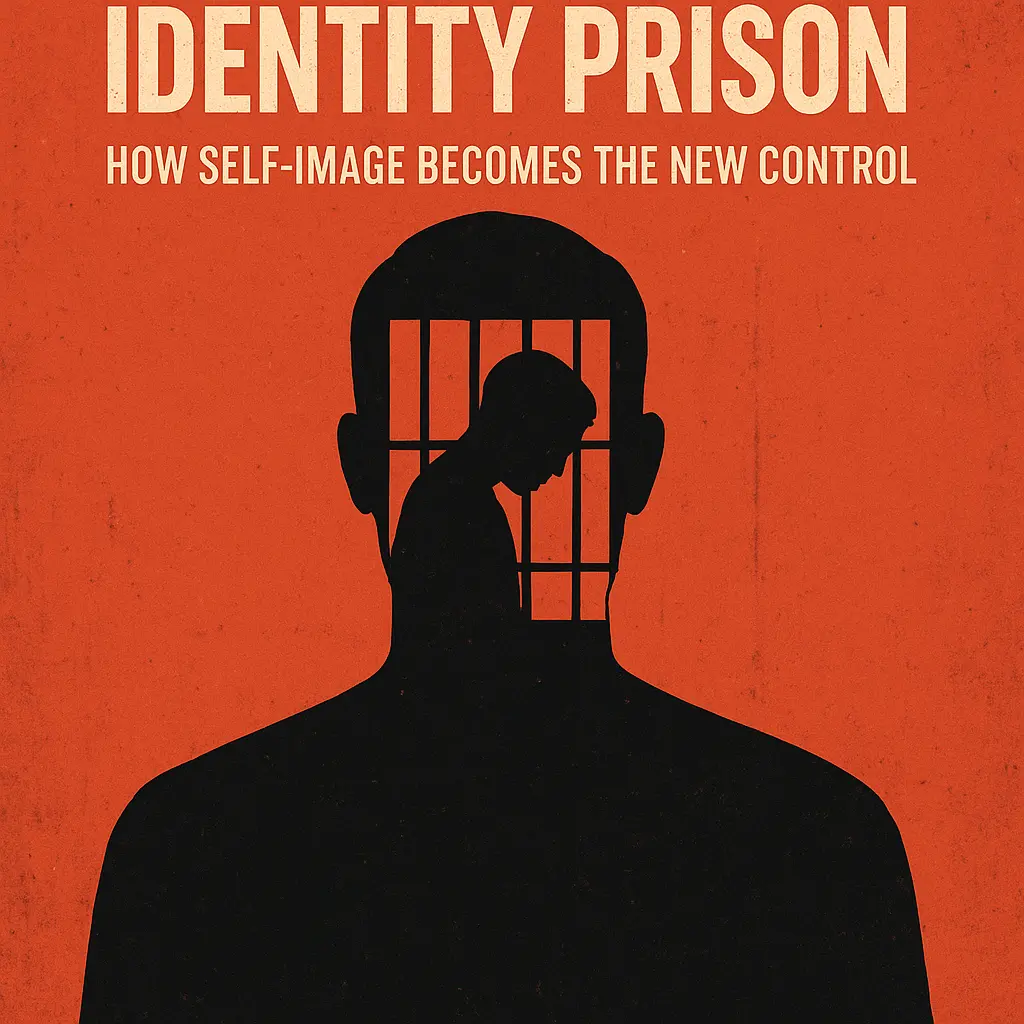
The Identity Prison: How Self-Image Becomes the New Control

A digital illustration of a person facing a cracked mirror, each shard reflecting a different version of their face, symbolizing how self-image fragments identity and becomes a form of control.

“The identity prison doesn’t need walls. It just needs you to defend them.”

TL;DR

  • Your self-image can trap you when it replaces awareness.
  • The identity prison thrives on approval and repetition.
  • Psychological control often feels like self-expression.
  • Belief conditioning trains obedience through validation.
  • Mental independence begins where comfort ends.

An identity prison is what happens when who you think you are becomes a form of psychological control. The walls are invisible, yet they hold firm. Every compliment, label, and like adds another brick. Soon, you live for confirmation instead of clarity. That is how obedience hides inside personality.

If The Loyalty Trap showed why people defend what holds them down, this post explains how that defense gets built. The identity prison turns belief into a badge. Then it makes you wear that badge even when it stops serving you.

“The most effective prison is the one you decorate yourself.”

Once your self-image becomes performance, you are manageable. You chase applause. You protect reputation. You fear disapproval. Platforms, brands, and tribes reward alignment, then call it authenticity. It feels honest. It is training.

The Making of an Identity Prison

“The easiest way to control someone is to make them defend their own reflection.”

The loop starts with reward. You post. People react. Your brain records the rush. Then you repeat it. Over time, recognition turns into policy. You obey what earns approval and avoid what risks judgment. It looks harmless at first, yet it shapes behavior fast.

This isn’t vanity. It is survival in a world where visibility feels like existence. Silence can feel like exile. So you adjust. You learn which takes get traction. You shave off nuance. You keep what performs and drop what stalls. Psychological control no longer needs fear. It uses preference and metrics.

The identity prison builds through repetition. A label here. A community there. A story you tell about yourself that hardens each time you repeat it. You stop testing the story because the story pays. Attention becomes currency, so you mint more of the same. The cost is awareness.

There is another layer. Once others expect you to act a certain way, you carry that expectation like duty. You become the reliable version of yourself. That reliability feels like integrity, but it is often just predictability. The prison likes predictable people.

Belief Conditioning and Emotional Branding

“You can sell anything if you convince people it proves who they are.”

Belief conditioning is simple. Attach emotion to an idea, repeat it often, and link it to identity. Do that well and logic stops being the referee. Emotion calls the fouls. You do not weigh claims. You protect them.

Brands use this. Movements use this. Media uses this. A product becomes a value. A value becomes a tribe. A tribe becomes a shield. If your self-image sits behind that shield, you will defend it even when the facts shift. You feel righteous. You also stop learning.

Here is the trick. Repetition feels like truth. The more you hear it, the more you trust it. That is why slogans work. That is why taglines stick. That is why timelines fill with the same takes wearing different logos. It is psychological control wearing pride as camouflage.

Notice the cues. Phrases that feel good to say. Images that flatter your side. Stories that place your group in the role of the steady hero. These are not always lies. They are comfort. Comfort can be true, yet it still weakens your curiosity if you never test it.

Comfort and Compliance in the Mirror

“You cannot rebel against the mirror that flatters you.”

Self-image loves comfort. It avoids friction even when friction builds strength. So you maintain habits, opinions, and relationships that affirm your current reflection. Discomfort feels like threat, not growth. That is why people stay loyal to roles that exhaust them. Familiar control can feel safer than unknown freedom.

The identity prison thrives here. It convinces you that change equals betrayal. Friends, followers, and families echo the current version of you. That echo sounds like truth because it is loud and close. Comfort replaces curiosity, and curiosity is where freedom begins.

Look at the daily patterns. Do you soften a point because it could cost attention. Do you avoid a topic because the group will push back. Do you over-explain to stay liked. These are small decisions. Together they build a cage around your voice.

There is a path out. It starts with one honest answer to one simple question. Who would you be without the applause. If that answer scares you, the mirror holds more power than you want to admit.

Social Mirrors and the Habit of Agreement

“Agreement feels safe. Habit makes it automatic.”

People reflect each other. That is normal. It helps groups function. The trouble starts when reflection turns into a requirement. You begin to pre-edit your thoughts to match the room. You agree faster. You disagree softer. You trade accuracy for peace and call it unity.

This is where the identity prison tightens. It takes less and less pressure to keep you in line. A raised eyebrow will do. A quiet unfollow will do. You stay because leaving costs attention and belonging. Meanwhile your range shrinks. Your confidence lives on borrowed approval.

To break that habit, practice clean disagreement. Short. Calm. Specific. No heat. You will find out who respects clarity and who only respects compliance. Either way you learn. Learning is oxygen inside the prison.

The Illusion of Choice and the Menu You Didn’t Write

“A limited menu still feels free when you forget who wrote it.”

Choice feels like freedom. It often is. Yet many choices live inside a menu designed by others. You can pick any option, but you rarely ask why those options exist. That is how an identity prison hides inside normal life. The menu flatters your self-image. It also limits your path.

Watch for binary traps. Us or them. This or that. Real or fake. Simple splits make strong teams and weak thinkers. They work because they are easy to explain and quick to defend. The cost is nuance. Nuance is where truth usually sits.

Step outside the menu once a day. Ask a third question. Add a missing angle. Sit with a fact that does not fit your story. None of that is betrayal. It is inspection. Inspection is how you keep control over your own mind.

When Self-Image Controls the Message

“If the crowd pays you for attention, the crowd steers your tone.”

The Drift From Core

I see this every week as a creator. Platforms reward watch time. Brands reward alignment. Audiences reward familiarity. If you slow down to think, reach drops. If you sharpen the truth, some people leave. That pressure is real. It can warp your self-image if you let it.

When I started The Rogue Banshee, it was a gunsmithing channel. I filmed disassembly and re-assembly, shared techniques, and loved the process. Then the numbers climbed and I started doing product reviews. It looked like growth, but it felt like drift. I had built a version of myself that the algorithm liked more than I did. Every upload became a calculation. Every view was a scoreboard. What started as freedom slowly turned into a job.

The Mask I Built

Over the years I chased the idea of being a “YouTube personality.” I thought that version of me was what success looked like. It wasn’t. It was another mask in the identity prison. The work that once recharged me began to drain me. The more I tried to fit the image, the less I recognized the person behind it.

Eventually I came full circle. I realized that the core, the teaching, the craftsmanship, the independence, was what mattered. That adventure was worth taking because it showed me where the limits of self-image end. I learned that even good intentions can build walls if you forget why you started. Now I am rebuilding from the center, creating because it means something again, not because it trends.

The Break With Brands

When I tried to change directions, I had brands tell me I was basically an unpaid intern and they were not on board with my changes. I even had a brand tell me that if I was unhappy with the arrangement, I should go back to the brand they replaced. They did not pay me. They shipped product and told me to produce content on Instagram. I said “fuck this,” burned the relationship to the ground, and started looking for partners who match my values.

The Reset To Core

That is the danger of a refined image. It performs well until it replaces the real person. The only way back is honesty. Not rebranding. Not reinvention. Just truth. When you speak from your core, the numbers might fall, but your freedom returns. That trade is always worth it.

Reclaiming Mental Independence

“Freedom begins the moment you question your own reflection.”

Mental independence is not rebellion for its own sake. It is the habit of seeing your thoughts as tools, not as laws. You can update them. You can retire them. You can test them without shame. That habit weakens every structure built on predictability. Control loses leverage when you stop being easy to map.

Start with small moves. Write down one belief you have never tested. Ask how you learned it. Ask who benefits when you keep it. Sit in silence for five minutes before you answer. Then try one act that conflicts with your usual label. Cook a meal you never cook. Read a source you never read. Talk to someone you avoid. You are not betraying yourself. You are checking the locks.

Keep a simple ledger. When you catch yourself protecting reputation instead of reasoning, mark it. When you choose discomfort over applause, mark it. That ledger will show progress long before the crowd notices. Results first. Recognition later.

The Practice of Seeing Clearly

“Awareness does not free you instantly. It gives you the map.”

Freedom is not an event. It is a daily practice. Watch your mind without letting it run the show. Fail. Observe. Recalibrate. Replace performance with participation. Speak without rehearsing the reaction. The less you depend on validation, the more authentic you become.

Your identity should serve you. It should not own you. The goal is not to erase who you are. The goal is to understand why you believe what you believe. When awareness replaces assumption, obedience fades. You stop playing a character in someone else’s story. You start writing your own.

Freedom starts in the mind. Light the Fuse.

FAQ

“Awareness is rebellion at its quietest.”

What is an identity prison?
It is a state where your self-image becomes a cage built from approval and repetition. You defend who you think you are instead of exploring who you could be.

How does self-image create control?
When reputation becomes survival, behavior follows reward. That is psychological control disguised as self-expression.

What is belief conditioning?
It links values to emotion so tightly that logic cannot challenge them. You obey feelings, not facts.

How do I build mental independence?
Question what you protect. Try discomfort. Let silence replace reaction until you hear your own thoughts again.

Can awareness break psychological control?
Yes. Seeing the pattern weakens its grip. Every moment of observation reclaims a piece of your freedom.

Stay Sharp. Stay Free

No noise. No fluff. Just unfiltered insight on independence, mindset, and critical thought direct from Jason Schaller.

You’ll get:

  • Actionable ideas to reclaim your independence
  • Deep dives into comfort, control, and how to resist both
  • Stories that challenge the systems training you to stop thinking
  • Real frameworks for critical thought and self-reliance

Support & Resources

If you value what I write here, share it. Every repost, mention, and conversation helps spread the spark of independent thought.

Credits and Socials

Connect with Me:
Follow for new articles, behind-the-scenes content, and thought experiments that challenge the system:

Credits:
Original Content by Jason’s Fuse / My Rogue Solutions LLC
Credit: Jason Schaller
Email: jschaller@jasonsfuse.com

About the Author:
Jason Schaller is the creator of Jason’s Fuse — unfiltered thinking on independence, critical thought, and the courage to question everything. He is also the founder of The Rogue Banshee, a former professional gunsmith of 10 years, and a cybersecurity professional with nearly 30 years of experience. He holds some of the top Cybersecurity credentials like the CISSP, CISA and CRISC.

Disclaimers

Content Use & Responsibility
Jason’s Fuse publishes opinion and commentary designed to encourage independent thought. The ideas shared here are for informational and educational purposes only. Readers are encouraged to verify sources, form their own opinions, and apply judgment responsibly.

Affiliate Disclaimer
Some links may be affiliate-based. They cost you nothing but help support the mission of building true independence and critical thought.

Ethics Notice
Opinions expressed are Jason’s own and do not represent any employer or partner organization. All statements are made in good faith based on verified information at the time of writing.