Approval Culture: The Hidden Cost of Being Valued

Matchstick igniting inside a red circle behind bold white text reading Jason’s Fuse on a black background.

“Praise feels good until you notice what didn’t show up with it.”

TL;DR

  • Approval culture rewards predictability, not contribution.
  • Praise replaces pay when compliance is cheaper than compensation.
  • Being “valued” often means being managed, not respected.
  • Refusing approval culture triggers pressure, not conversation.
  • The system doesn’t punish refusal loudly. It just moves on.

Approval Culture Starts Where Pay Stops

“You’re doing a great job.”

That sentence sounds harmless. Encouraging, even. It lands like recognition. Like progress.

Then you check your paycheck.

It’s fine. Not insulting. Not generous. Just fine.

Fine is corporate code for don’t ask questions.

Approval culture lives in that gap. The space between praise and compensation.

You’re told you’re essential. You’re told you’re valued. You’re told the company couldn’t function without you.

But nothing changes.

Approval culture doesn’t exist to reward you. It exists to keep you calm.

How Approval Culture Turns Praise Into Control

“Predictable people are valuable because they don’t disrupt plans.”

People like to believe work rewards competence. It doesn’t.

It rewards reliability of behavior.

Approval culture trains that reliability by pairing praise with just enough comfort to keep you from pushing back. Not enough money to get ahead. Just enough affirmation to keep you invested.

Praise becomes a dopamine hit. A little chemical “good job” for the brain.

Like any drug, it works fast at first.

Then it fades.

So you chase the next hit. More effort. More hours. More responsibility.

Same praise. Same paycheck.

Approval culture doesn’t need to threaten you. It conditions you.

Why Approval Culture Feels Like Opportunity

“You’re being groomed.”

That phrase sounds like recognition. It feels like momentum.

In reality, it’s assignment.

Approval culture reframes expectation as opportunity. It hands you a future you didn’t ask for and waits to see if you’ll accept it gratefully.

You’re praised for staying on the path. For wanting what you’re supposed to want. For not asking whether the cost still makes sense.

The moment you hesitate, the tone shifts.

Not confrontation. Confusion.

Approval culture doesn’t argue. It just stops clapping.

How Approval Culture Replaced Pay

“Praise is cheaper than raises and harder to negotiate.”

Raises create benchmarks. They compound. They change expectations.

Praise costs nothing.

Approval culture leans on that math.

Instead of adjusting pay to match inflation, output, or responsibility, organizations inflate language.

Notice doesn’t pay rent. Appreciation doesn’t beat inflation.

Approval culture teaches you to feel ungrateful for noticing.

What Happens When You Refuse Approval Culture

“Refusal exposes assumptions people didn’t know they were making.”

Refusal isn’t dramatic.

You don’t storm out. You don’t give a speech.

You just stop responding to praise the way you’re supposed to.

You ask about compensation. You decline the next rung. You step back instead of up.

The reaction isn’t anger. It’s distance.

Approval culture doesn’t punish loudly. It disengages.

Once you stop being predictable, you stop being useful.

Leaving Approval Culture Without Making a Scene

“Rebellion works best when it requires no explanation.”

Rebellion isn’t loud. It’s boring.

It looks like letting an offer expire. Holding a line after the emergency passes. Saying no without a justification paragraph.

Approval culture hates silence. Silence breaks the conditioning.

No argument. No emotional hook. No approval to withdraw.

That’s when the leverage flips.

Approval Culture Rebuilds Itself Through Repetition

“Compliance returns when repetition stops.”

This isn’t a one-time choice.

Approval culture resets every review cycle, every reorg, every “exciting opportunity.”

The trap isn’t praise. It’s familiarity.

Stepping out requires repetition. Not once. Every time.

The Moment Approval Culture Finally Makes Sense

“Grooming prepares replacements, not people.”

Approval culture isn’t personal.

You weren’t special. You were predictable.

You mattered as long as your behavior fit the plan.

Once you stopped fitting, the system adjusted without emotion.

That’s not cruelty. That’s design.

What Approval Culture Takes Before You Notice

“Control works best when it feels like choice.”

Approval culture quietly removes agency, clarity, and leverage.

You don’t escape by working harder. You escape by noticing the mechanism.

How to Exit Approval Culture

“Refusal is the smallest act that changes everything.”

You exit approval culture by acting, not explaining.

Stop trading praise for silence. Stop accepting validation instead of value. Stop mistaking approval for respect.

Let the system recalibrate without you.

The Line That Matters

“Freedom begins where explanation ends.”

Approval culture doesn’t collapse when you leave it. It just stops paying attention.

That silence isn’t failure. It’s freedom.

Think.
Resist.
Become.
Now light the damn fuse.

Stay Sharp. Stay Free

No noise. No fluff. Just unfiltered insight on independence, mindset, and critical thought direct from Jason Schaller.

You’ll get:

  • Actionable ideas to reclaim your independence
  • Deep dives into comfort, control, and how to resist both
  • Stories that challenge the systems training you to stop thinking
  • Real frameworks for critical thought and self-reliance

Support & Resources

If you value what I write here, share it. Every repost, mention, and conversation helps spread the spark of independent thought.

Credits and Socials

Connect with Me:
Follow for new articles, behind-the-scenes content, and thought experiments that challenge the system:

Credits:
Original Content by Jason’s Fuse / My Rogue Solutions LLC
Credit: Jason Schaller
Email: jschaller@jasonsfuse.com

About the Author:
Jason Schaller is the creator of Jason’s Fuse — unfiltered thinking on independence, critical thought, and the courage to question everything. He is also the founder of The Rogue Banshee, a former professional gunsmith of 10 years, and a cybersecurity professional with nearly 30 years of experience. He holds some of the top Cybersecurity credentials like the CISSP, CISA and CRISC.

Disclaimers

Content Use & Responsibility
Jason’s Fuse publishes opinion and commentary designed to encourage independent thought. The ideas shared here are for informational and educational purposes only. Readers are encouraged to verify sources, form their own opinions, and apply judgment responsibly.

Affiliate Disclaimer
Some links may be affiliate-based. They cost you nothing but help support the mission of building true independence and critical thought.

Ethics Notice
Opinions expressed are Jason’s own and do not represent any employer or partner organization. All statements are made in good faith based on verified information at the time of writing.
The Action Trap: How to Restore Freedom Through Action

The Action Trap title graphic with bold distressed text on a dark textured background.

“The action trap works because it feels safe. It turns hesitation into routine until motion feels like a risk instead of a return to yourself.”

TL;DR

  • The action trap forms when stillness feels safer than movement.
  • Planning becomes avoidance when it replaces action.
  • Confidence weakens when unused and doubt fills the leftover space.
  • Freedom rebuilds through small, deliberate motion.
  • Your independence begins the moment you stop waiting for the perfect time.
The action trap is quiet. It never announces itself. It hides in the part of your life that looks responsible while slowly draining your momentum. You keep telling yourself you need more time, more clarity or possibly more readiness. You convince yourself that waiting protects you from failure, but it doesn’t. Waiting only protects the routines that keeps you from finding your thoughts, voice and freedom.

“Hesitation is not caution. It is consent. The moment you wait without reason, you let someone else decide the pace of your life.”

If you read Monday’s post The Fear Machine, you already understand how fear freezes people. If you read Wednesday’s article Independent Thinking: How to Think Free When the World Stops, you understand how clarity dismantles mental traps. Today is different. Today is ignition. This is where thought becomes movement and movement becomes freedom.

The Mechanics of the Action Trap

“Most people wait so long for the right moment that the moment becomes the excuse.”

The action trap starts quietly. You delay one task because the timing feels off or postpone a decision because you want to think it through. Eventually, you ignore an opportunity because life feels too loud. None of these choices feel harmful in the moment, but each one is a small vote for stillness. Those votes stack up, and sooner or later you stop realizing that you are choosing at all. The trick of the action trap is to not act too soon, but also not delay it so that inaction becomes the norm.

The strategy of “overwhelming” makes the trap feel reasonable. When life piles on, the mind insists on perfect clarity before taking the first step. It becomes easy to believe that a full blueprint is required, that every risk must be understood in advance. The logic sounds responsible and even mature. Yet most of the time, this is avoidance dressed up as preparation. Planning transforms into a shield because the idea of moving feels heavier than the idea of thinking.

Waiting eventually begins to feel like maturity. Thoughts drift toward phrases that make hesitation sound thoughtful and intentional. Space seems necessary, timing feels sacred, and caution looks like discipline. Those phrases paint a picture of strategy, but they often delay the part of life that asks for real courage. What passes for patience is usually an agreement with doubt, not a plan for better outcomes.

The action trap strengthens itself in quieter ways. A day of delay feels harmless, and taking another week to “think about it” feels deserved. The slower rhythm convinces you that nothing urgent is being lost. But stillness has a cost. Confidence thins out when it is unused, and hesitation accumulates weight. What was once a simple pause starts shaping how you see yourself. Starting again feels heavier each day, and movement begins to look like a threat instead of a return to your own momentum.

Why Waiting Serves Everyone Except You

“Every system runs smoother when you stay predictable. Stillness keeps you predictable.”

The action trap does not appear by accident. It fits neatly into how modern systems are designed to function. Platforms profit when you keep scrolling instead of creating. Employers gain stability when you stick to the routine instead of taking risks that might lead you somewhere else. Even your own habits prefer comfort because comfort asks nothing of you. Stillness becomes an efficient arrangement for everyone except the person who actually needs to grow.

Think back to Monday’s breakdown on fear. Fear freezes decision-making and frozen people are easy to influence. Wednesday’s article showed how independent thinking interrupts that loop. Action goes further than both as It threatens every structure that benefits from your predictability. The moment you begin to move, you become harder to categorize and nearly impossible to steer.

While you hesitate, someone else takes the advantage you surrendered. Someone else moves forward with the time you gave away while other use the opportunities you stepped around. The world quietly rewards your stillness because stillness is simple to manage. When you pause long enough, you fall into a rhythm that keeps everything running smoothly for everyone but you.

Waiting also reshapes your identity in ways most people never notice. You begin to see yourself as an observer instead of a participant and watch other people take risks while you tell yourself you will act later. Reaction to life becomes the norm instead of building anything of your own. Once that identity takes hold, the world no longer needs to slow you down because you start doing the job on its behalf.

That cycle looks harmless in the moment, but it becomes destructive over time. You wait because you feel unsure and stay still because fear grows in the space you refuse to fill. The days begin to feel like a doom loop of Ground Hod Day while the action trap tightens without pressure because nothing in your life interrupts the loop.

How I Fell Into the Action Trap

“Momentum dies quietly. Then one day you look back and realize you haven’t moved.”

I know the action trap well because I built a damn house in it. When The Rogue Banshee started, it was a a simple channel where I showed complete teardown of guns and showed how to put them back together.

Then growth happened. Brands stepped in (with their expectations). I shifted toward reviews because numbers told me it was “smart” even when it felt wrong. That shift created hesitation and every upload became a decision instead of an expression. Every idea had to pass a mental committee of analytics and imagined expectations. Motion turned into negotiation.

I convinced myself I needed the right plan with the right timing. I convinced myself I needed one more piece of information before shifting course. Time kept moving while I stayed still and built my own trap. That is the part the action trap hides best, it gives you reasons that sound mature while quietly draining your confidence.

The low point came when a brand told me I was basically an unpaid intern. No money, no support and just be happy with the product in exchange for content. They said if I did not like the deal, I could go back to the brand they replaced. I realized I had negotiated myself into a corner by waiting for permission that I never needed. So I burned the bridge, stepped away and returned to my core work.

The moment I shifted back, motion returned. I stopped waiting for perfect conditions and negotiating with my mental doubt. I started moving again because clarity brought independence which started momentum. That is how you escape the action trap. You move while you still feel unsure.

Daily Practices That Break the Action Trap

“Most breakthroughs start as tiny, boring steps that feel almost invisible when you take them.”

Action does not need drama or spectacle. It needs movement. It needs intention. It needs a decision made without bargaining. Here are the habits that rebuild that muscle.

Start Small on Purpose

Big goals create hesitation. Small actions create confidence. Pick one task you can finish in five minutes. Complete it without debate. That small win resets your internal pace far better than motivation ever could.

Set One Daily Non-Negotiable

Choose something you do every day no matter what. Reading. Writing. Repairing. Training. Learning. Discipline beats inspiration. It also builds identity and identity drives action.

Lower the Activation Energy

Remove friction. Lay out your tools the night before. Prep your workspace. Set your clothes aside. Reduce the number of decisions between you and movement. The easier it is to begin, the faster you build consistency.

Leave One Thing Unfinished

End your day with a task slightly incomplete. That small cliffhanger gives your mind something to return to and makes starting easier. Beginning from momentum beats beginning from zero.

Measure Motion, Not Perfection

Perfection stalls people. Progress frees them. Track your week by what you moved, not what you perfected. Forward is forward even when it is small.

Rebuilding Freedom Through Action

“Freedom appears the moment you move with intention. Stillness only protects your doubts.”

Freedom grows through motion and every time you choose momentum over doubt. It grows when you stop waiting for the perfect roadmap and instead step into the moment you have. Action is the catalyst that turns clarity into reality and ideas into progress.

Rebellion does not always look dramatic, sometimes it is a single step you have ignored for years. It can also be starting a project without asking for permission or learning a skill that felt intimidating. Every act of movement signals that hesitation no longer gets the final vote.

If you want to escape the action trap, stop waiting for the feeling of readiness and do what is in front of you. Your future self will thank you. The fuse is in your hands, so light it.

Freedom starts in the mind. Light the Fuse.

FAQ

“Action clears confusion faster than thinking ever will.”

What is the action trap?
A pattern where hesitation replaces progress until stillness becomes automatic.

Why does waiting feel safer?
Because doubt prefers comfort. Comfort asks nothing from you. Movement does.

How can I break the trap?
Start small. Build consistency. Remove friction. Action grows through repetition, not intensity.

Does action mean rushing?
No. Action means moving with purpose. You choose a direction and step into it without bargaining.

What should I do today?
Pick one thing you have avoided. Finish it. Prove to yourself that motion is still possible.

Independent Thinking: How to Think Free When the World Stops

Independent Thinking title graphic with bold distressed text on a dark textured background.

“Independent thinking is not rebellion for attention. It is awareness in motion, the work of staying awake when the world powers down.”

TL;DR

  • Independent thinking is the foundation of freedom.
  • The world rewards reaction, not reflection.
  • Clarity starts when you slow down and question habits.
  • Discipline protects your mind from outside control.
  • Awareness builds independence one deliberate choice at a time.
Independent thinking is the quiet rebellion most people never commit to. Every platform pushes you to react fast. Every algorithm rewards the loudest response. The pace leaves no room for clarity, and without clarity, obedience feels like reason.

Thinking for yourself means pausing when everyone else rushes. That pause changes everything. It’s the break that resets your mind and reveals how often your opinions are rented, not earned.

“You cannot steer someone who keeps asking questions.”

Independent thinking is not a personality trait. It is a skill, trained through friction and time. The world sells simplicity and calls it progress, but ease kills depth. Slowness is how you reclaim your own thought process. The moment you ask who benefits from your agreement, you begin to think free.

Why It Matters

When you stop thinking independently, you stop living consciously. Most of what passes for awareness today is a loop of recycled outrage. People defend sides they never questioned. They echo the loudest source instead of testing the idea. Freedom dies quietly inside that routine, and most never notice until silence feels safer than truth.

The Conditioning of Obedient Thought

“The world does not steal your thoughts. It convinces you to stop using them.”

From the start, you are trained to comply. Schools reward recall, not reasoning. Work rewards silence, not curiosity. Platforms reward anger, not understanding. The pattern repeats until obedience feels like cooperation and comfort feels like progress.

How the Pattern Hides

Modern conditioning disguises itself as help. Autofill finishes your sentence while recommendations finish your curiosity. Shortcuts finish your patience. Each assist saves seconds but drains awareness. With time, you forget what effort feels like. You stop noticing how often you accept what’s given to you.

Convenience is control wearing a friendly face. When everything runs smoothly, you forget to ask who’s steering it. You think you are saving time, yet you are only saving the system effort. The more you rely on it, the less you participate in your own life.

Independent Thinking Breaks the Loop

You break conditioning by adding friction on purpose. Read one long article without checking comments. Finish a book without multitasking. Question why a story exists before deciding if it’s true. Each small act of resistance rebuilds control over your mind. Freedom of thought grows one deliberate pause at a time.

The Discipline Behind Independence

“Freedom of mind is not emotion. It is maintenance.”

Independent thinking requires discipline, not defiance. It’s the decision to stay curious even when you are tired, to verify when everyone else reacts. That work is slow, but slow thinking builds durable awareness. Most people choose quick comfort instead. They scroll, skim, and nod along. It feels productive. It isn’t.

Boundaries Create Clarity

Discipline starts with your inputs. Set boundaries for what earns your attention. Read before you scroll. Write before you share. Listen before you respond. Boundaries slow the loop and give your mind time to work. The longer you wait before reacting, the clearer your next thought becomes.

Friction Builds Strength

Effort creates understanding. Each time you learn a skill from scratch or unpack an idea by yourself, you strengthen independence. The world will call it inefficient. That’s fine. Efficiency without awareness is just automation. True clarity takes patience, and patience always looks like resistance to the impatient.

Questions That Keep You Free

  • What do I actually know?
  • Who benefits from my agreement?
  • What’s missing from this frame?
  • What would make me change my mind?

These questions are a mental firewall. Use them daily. They protect you from narratives built to steer you.

When I Lost My Own Thinking

“The crowd will always cheer for the predictable version of you.”

When my channel started growing, I mistook attention for achievement. The algorithm rewarded what it already liked, so I repeated it. The rhythm felt like progress, yet it was drift. The more I optimized, the less I questioned. The machine wasn’t silencing me, it was rewarding my obedience.

The Drift

I built content that fit a mold. Brands shaped tone. Analytics shaped decisions. Creativity turned into calibration. It looked successful on paper, but it felt empty. I had stopped thinking. I was producing, not teaching. Growth had become a trap built out of my own compliance.

The Return

I pulled back and started rebuilding from the core. I made videos that felt right, even when they broke the algorithm’s rhythm. The numbers fell, and the algorithm was confused. The YouTube analytics couldn’t tell me what my audience watched outside of my content (yes YouTube does that, creeped out yet?). That’s the trade independent thinking demands, clarity instead of applause. Once you taste that kind of freedom, you stop caring about approval metrics.

Independent thinking saved the work. It is turning my channel back into a craft instead of a performance. That lesson holds for anyone who’s ever lost themselves chasing numbers. Freedom starts the moment you choose honesty over validation.

Rebuilding Mental Independence

“Awareness is a muscle. It strengthens when used and fades when ignored.”

You don’t need to change your life to regain independence, you just need to change your rhythm. Rebuilding starts small. One choice. One deliberate act of attention. Over time, those acts add up and become a mindset that resists manipulation.

Daily Practice

  • Read long on purpose. Finish one full piece without switching tasks.
  • Write before you share. Express your view, then verify it.
  • Wait before reacting. Time exposes emotional traps.
  • Audit your inputs. Replace noise with original sources.
  • Challenge yourself. Argue your own beliefs in reverse.

Weekly Practice

  • Pick one hard topic. Research it, teach it, and summarize it in plain language.
  • Take one media-free evening. Build something tangible or think without stimulus.
  • Repair one thing you own. Skill builds confidence, and confidence silences noise.

Track It

Keep a simple record of what changes your mind. Write the date, topic, and trigger. Over months, you’ll see proof that you can evolve on purpose. That confidence is what independent thinking builds. It’s not rebellion. It’s refinement.

Clarity as Rebellion

“Clarity will make you an outsider. Stay there.”

The world runs on confusion because confusion sells guidance. When you start seeing clearly, you stop needing permission. You ask better questions and act from purpose, not panic. That’s the kind of rebellion that scares systems because they can’t effentiently monetize awareness.

Why It Matters

Clarity replaces panic with understanding. So, when you think for yourself, fear loses leverage and you make decisions that align with your values, not the crowd’s. Calm thinkers are the hardest people to control. And that’s why independent thinking isn’t taught. It’s rediscovered.

How to Hold the Line

  • Choose depth over speed. A missed trend isn’t a loss.
  • Speak after you understand, not before.
  • Keep friends who challenge you without hostility.
  • Rest intentionally. Tired minds obey faster.

What Changes When You Think Free

You stop asking for permission to understand, stop mistaking volume for value and you sure as hell stop treating outrage as proof. Instead, you start observing before deciding and start living aligned with logic and integrity. That is freedom in motion so get your ass in gear and start thinking for yourself.

Freedom starts in the mind. Light the Fuse.

FAQ

“Independent thinking is awareness with backbone.”

What is independent thinking?
It’s the ability to reason without outsourcing judgment to trends, politics, or algorithms.

Why is it rare?
Because the world rewards speed over depth. Thinking takes time, and time feels expensive.

How do I rebuild it?
Insert friction. Read long. Write first. Share later. Audit your inputs and test your own beliefs.

Does it mean isolation?
No. It means ownership. You can learn from anyone while staying mentally independent.

What should I do today?
Unplug for one hour. Read something difficult. Write a paragraph about what you believe and why. Keep it for yourself.

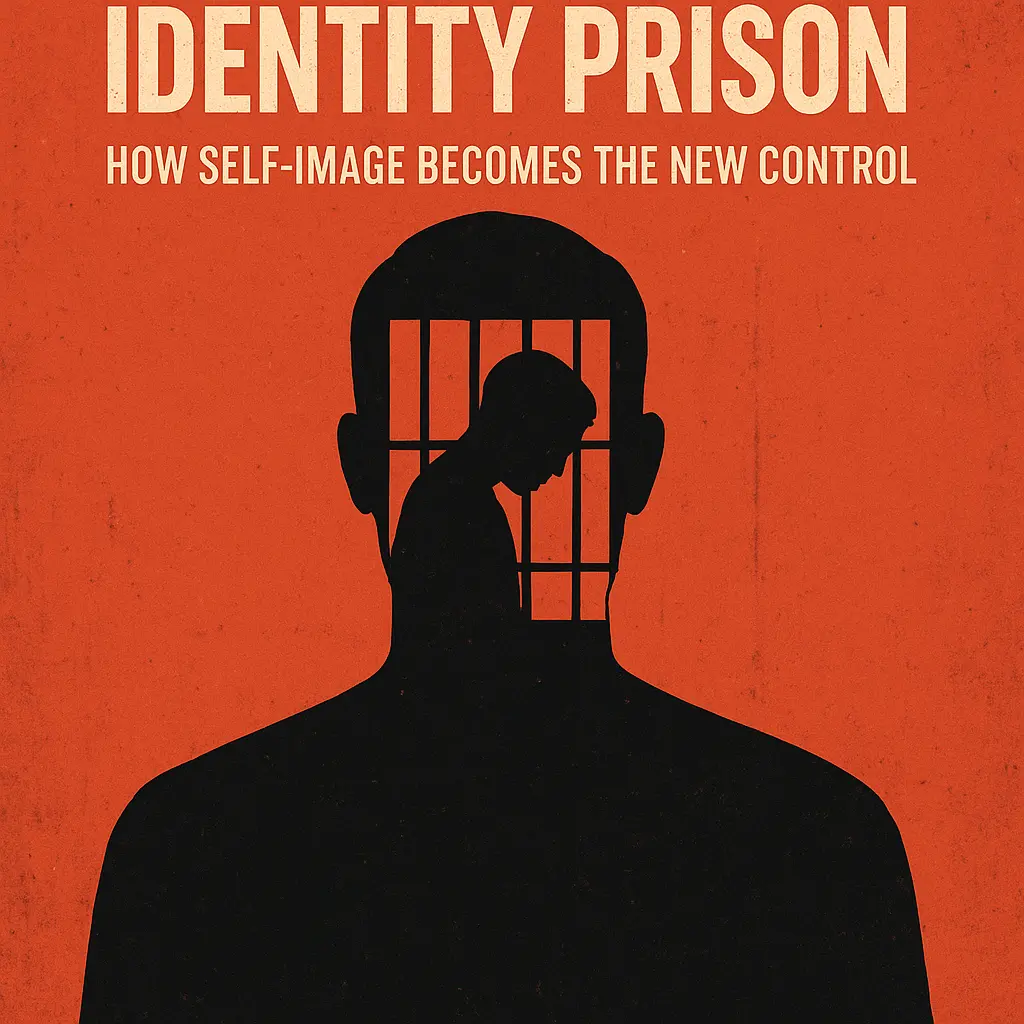
The Identity Prison: How Self-Image Becomes the New Control

A digital illustration of a person facing a cracked mirror, each shard reflecting a different version of their face, symbolizing how self-image fragments identity and becomes a form of control.

“The identity prison doesn’t need walls. It just needs you to defend them.”

TL;DR

  • Your self-image can trap you when it replaces awareness.
  • The identity prison thrives on approval and repetition.
  • Psychological control often feels like self-expression.
  • Belief conditioning trains obedience through validation.
  • Mental independence begins where comfort ends.

An identity prison is what happens when who you think you are becomes a form of psychological control. The walls are invisible, yet they hold firm. Every compliment, label, and like adds another brick. Soon, you live for confirmation instead of clarity. That is how obedience hides inside personality.

If The Loyalty Trap showed why people defend what holds them down, this post explains how that defense gets built. The identity prison turns belief into a badge. Then it makes you wear that badge even when it stops serving you.

“The most effective prison is the one you decorate yourself.”

Once your self-image becomes performance, you are manageable. You chase applause. You protect reputation. You fear disapproval. Platforms, brands, and tribes reward alignment, then call it authenticity. It feels honest. It is training.

The Making of an Identity Prison

“The easiest way to control someone is to make them defend their own reflection.”

The loop starts with reward. You post. People react. Your brain records the rush. Then you repeat it. Over time, recognition turns into policy. You obey what earns approval and avoid what risks judgment. It looks harmless at first, yet it shapes behavior fast.

This isn’t vanity. It is survival in a world where visibility feels like existence. Silence can feel like exile. So you adjust. You learn which takes get traction. You shave off nuance. You keep what performs and drop what stalls. Psychological control no longer needs fear. It uses preference and metrics.

The identity prison builds through repetition. A label here. A community there. A story you tell about yourself that hardens each time you repeat it. You stop testing the story because the story pays. Attention becomes currency, so you mint more of the same. The cost is awareness.

There is another layer. Once others expect you to act a certain way, you carry that expectation like duty. You become the reliable version of yourself. That reliability feels like integrity, but it is often just predictability. The prison likes predictable people.

Belief Conditioning and Emotional Branding

“You can sell anything if you convince people it proves who they are.”

Belief conditioning is simple. Attach emotion to an idea, repeat it often, and link it to identity. Do that well and logic stops being the referee. Emotion calls the fouls. You do not weigh claims. You protect them.

Brands use this. Movements use this. Media uses this. A product becomes a value. A value becomes a tribe. A tribe becomes a shield. If your self-image sits behind that shield, you will defend it even when the facts shift. You feel righteous. You also stop learning.

Here is the trick. Repetition feels like truth. The more you hear it, the more you trust it. That is why slogans work. That is why taglines stick. That is why timelines fill with the same takes wearing different logos. It is psychological control wearing pride as camouflage.

Notice the cues. Phrases that feel good to say. Images that flatter your side. Stories that place your group in the role of the steady hero. These are not always lies. They are comfort. Comfort can be true, yet it still weakens your curiosity if you never test it.

Comfort and Compliance in the Mirror

“You cannot rebel against the mirror that flatters you.”

Self-image loves comfort. It avoids friction even when friction builds strength. So you maintain habits, opinions, and relationships that affirm your current reflection. Discomfort feels like threat, not growth. That is why people stay loyal to roles that exhaust them. Familiar control can feel safer than unknown freedom.

The identity prison thrives here. It convinces you that change equals betrayal. Friends, followers, and families echo the current version of you. That echo sounds like truth because it is loud and close. Comfort replaces curiosity, and curiosity is where freedom begins.

Look at the daily patterns. Do you soften a point because it could cost attention. Do you avoid a topic because the group will push back. Do you over-explain to stay liked. These are small decisions. Together they build a cage around your voice.

There is a path out. It starts with one honest answer to one simple question. Who would you be without the applause. If that answer scares you, the mirror holds more power than you want to admit.

Social Mirrors and the Habit of Agreement

“Agreement feels safe. Habit makes it automatic.”

People reflect each other. That is normal. It helps groups function. The trouble starts when reflection turns into a requirement. You begin to pre-edit your thoughts to match the room. You agree faster. You disagree softer. You trade accuracy for peace and call it unity.

This is where the identity prison tightens. It takes less and less pressure to keep you in line. A raised eyebrow will do. A quiet unfollow will do. You stay because leaving costs attention and belonging. Meanwhile your range shrinks. Your confidence lives on borrowed approval.

To break that habit, practice clean disagreement. Short. Calm. Specific. No heat. You will find out who respects clarity and who only respects compliance. Either way you learn. Learning is oxygen inside the prison.

The Illusion of Choice and the Menu You Didn’t Write

“A limited menu still feels free when you forget who wrote it.”

Choice feels like freedom. It often is. Yet many choices live inside a menu designed by others. You can pick any option, but you rarely ask why those options exist. That is how an identity prison hides inside normal life. The menu flatters your self-image. It also limits your path.

Watch for binary traps. Us or them. This or that. Real or fake. Simple splits make strong teams and weak thinkers. They work because they are easy to explain and quick to defend. The cost is nuance. Nuance is where truth usually sits.

Step outside the menu once a day. Ask a third question. Add a missing angle. Sit with a fact that does not fit your story. None of that is betrayal. It is inspection. Inspection is how you keep control over your own mind.

When Self-Image Controls the Message

“If the crowd pays you for attention, the crowd steers your tone.”

The Drift From Core

I see this every week as a creator. Platforms reward watch time. Brands reward alignment. Audiences reward familiarity. If you slow down to think, reach drops. If you sharpen the truth, some people leave. That pressure is real. It can warp your self-image if you let it.

When I started The Rogue Banshee, it was a gunsmithing channel. I filmed disassembly and re-assembly, shared techniques, and loved the process. Then the numbers climbed and I started doing product reviews. It looked like growth, but it felt like drift. I had built a version of myself that the algorithm liked more than I did. Every upload became a calculation. Every view was a scoreboard. What started as freedom slowly turned into a job.

The Mask I Built

Over the years I chased the idea of being a “YouTube personality.” I thought that version of me was what success looked like. It wasn’t. It was another mask in the identity prison. The work that once recharged me began to drain me. The more I tried to fit the image, the less I recognized the person behind it.

Eventually I came full circle. I realized that the core, the teaching, the craftsmanship, the independence, was what mattered. That adventure was worth taking because it showed me where the limits of self-image end. I learned that even good intentions can build walls if you forget why you started. Now I am rebuilding from the center, creating because it means something again, not because it trends.

The Break With Brands

When I tried to change directions, I had brands tell me I was basically an unpaid intern and they were not on board with my changes. I even had a brand tell me that if I was unhappy with the arrangement, I should go back to the brand they replaced. They did not pay me. They shipped product and told me to produce content on Instagram. I said “fuck this,” burned the relationship to the ground, and started looking for partners who match my values.

The Reset To Core

That is the danger of a refined image. It performs well until it replaces the real person. The only way back is honesty. Not rebranding. Not reinvention. Just truth. When you speak from your core, the numbers might fall, but your freedom returns. That trade is always worth it.

Reclaiming Mental Independence

“Freedom begins the moment you question your own reflection.”

Mental independence is not rebellion for its own sake. It is the habit of seeing your thoughts as tools, not as laws. You can update them. You can retire them. You can test them without shame. That habit weakens every structure built on predictability. Control loses leverage when you stop being easy to map.

Start with small moves. Write down one belief you have never tested. Ask how you learned it. Ask who benefits when you keep it. Sit in silence for five minutes before you answer. Then try one act that conflicts with your usual label. Cook a meal you never cook. Read a source you never read. Talk to someone you avoid. You are not betraying yourself. You are checking the locks.

Keep a simple ledger. When you catch yourself protecting reputation instead of reasoning, mark it. When you choose discomfort over applause, mark it. That ledger will show progress long before the crowd notices. Results first. Recognition later.

The Practice of Seeing Clearly

“Awareness does not free you instantly. It gives you the map.”

Freedom is not an event. It is a daily practice. Watch your mind without letting it run the show. Fail. Observe. Recalibrate. Replace performance with participation. Speak without rehearsing the reaction. The less you depend on validation, the more authentic you become.

Your identity should serve you. It should not own you. The goal is not to erase who you are. The goal is to understand why you believe what you believe. When awareness replaces assumption, obedience fades. You stop playing a character in someone else’s story. You start writing your own.

Freedom starts in the mind. Light the Fuse.

FAQ

“Awareness is rebellion at its quietest.”

What is an identity prison?
It is a state where your self-image becomes a cage built from approval and repetition. You defend who you think you are instead of exploring who you could be.

How does self-image create control?
When reputation becomes survival, behavior follows reward. That is psychological control disguised as self-expression.

What is belief conditioning?
It links values to emotion so tightly that logic cannot challenge them. You obey feelings, not facts.

How do I build mental independence?
Question what you protect. Try discomfort. Let silence replace reaction until you hear your own thoughts again.

Can awareness break psychological control?
Yes. Seeing the pattern weakens its grip. Every moment of observation reclaims a piece of your freedom.

Stay Sharp. Stay Free

No noise. No fluff. Just unfiltered insight on independence, mindset, and critical thought direct from Jason Schaller.

You’ll get:

  • Actionable ideas to reclaim your independence
  • Deep dives into comfort, control, and how to resist both
  • Stories that challenge the systems training you to stop thinking
  • Real frameworks for critical thought and self-reliance

Support & Resources

If you value what I write here, share it. Every repost, mention, and conversation helps spread the spark of independent thought.

Credits and Socials

Connect with Me:
Follow for new articles, behind-the-scenes content, and thought experiments that challenge the system:

Credits:
Original Content by Jason’s Fuse / My Rogue Solutions LLC
Credit: Jason Schaller
Email: jschaller@jasonsfuse.com

About the Author:
Jason Schaller is the creator of Jason’s Fuse — unfiltered thinking on independence, critical thought, and the courage to question everything. He is also the founder of The Rogue Banshee, a former professional gunsmith of 10 years, and a cybersecurity professional with nearly 30 years of experience. He holds some of the top Cybersecurity credentials like the CISSP, CISA and CRISC.

Disclaimers

Content Use & Responsibility
Jason’s Fuse publishes opinion and commentary designed to encourage independent thought. The ideas shared here are for informational and educational purposes only. Readers are encouraged to verify sources, form their own opinions, and apply judgment responsibly.

Affiliate Disclaimer
Some links may be affiliate-based. They cost you nothing but help support the mission of building true independence and critical thought.

Ethics Notice
Opinions expressed are Jason’s own and do not represent any employer or partner organization. All statements are made in good faith based on verified information at the time of writing.
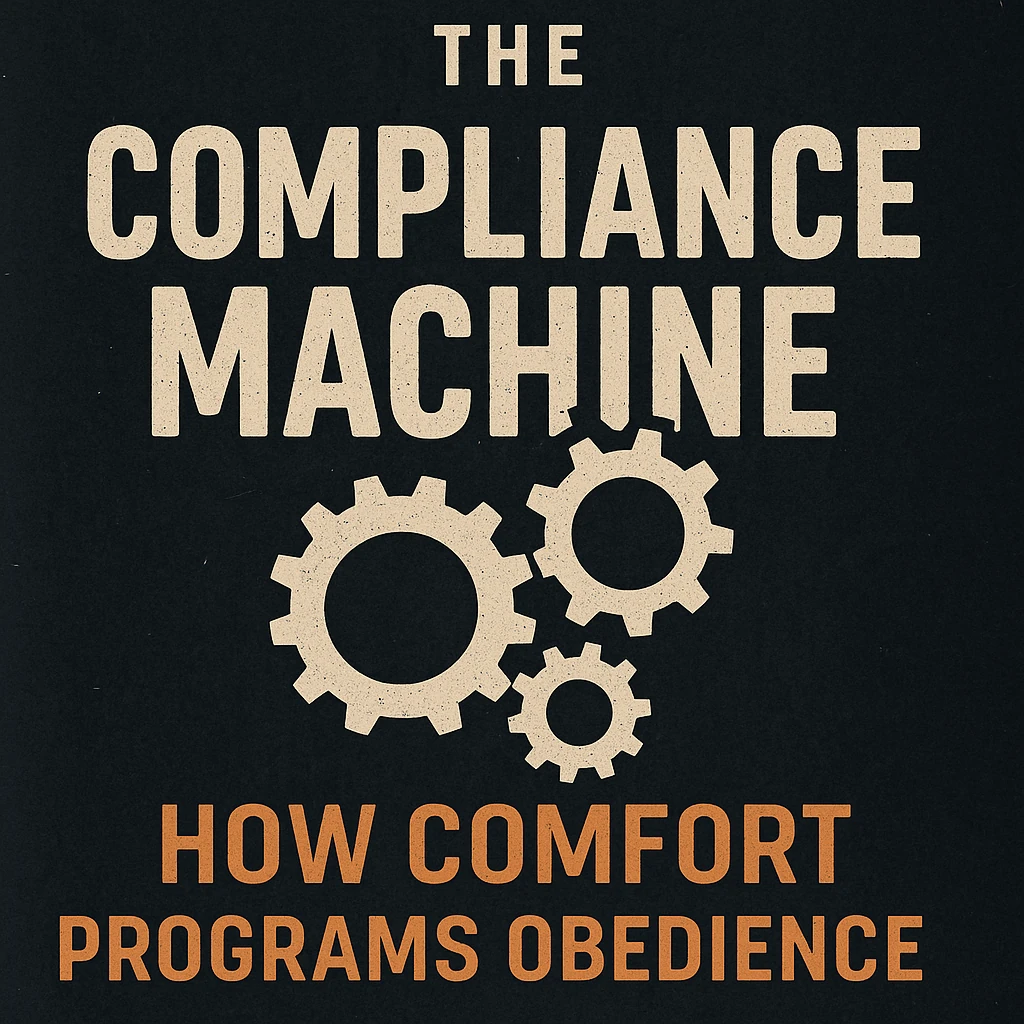
The Compliance Machine: How to Rebuild Freedom One Choice at a Time

A digital illustration of a person surrounded by glowing screens and soft mechanical tendrils, symbolizing how comfort programs obedience in the modern world.

“The compliance machine does not shout. It comforts you until you accept its limits as your own.”

TL;DR

  • Comfort is the new control because it feels like freedom.
  • Every shortcut you take makes you easier to guide.
  • Ease trains obedience one habit at a time.
  • Friction builds skill, awareness, and independence.
  • Effort is how you take back control from the machine.

Comfort’s Quiet Conversion

“The compliance machine begins where attention ends.”

Comfort used to be the reward after the work. Now it’s the trap that keeps you from noticing who’s holding the door open. You set auto pay, your car steers for you, your phone fills in the blanks. Every feature saves a few seconds. Thing is, each one steals a reason to stay sharp.

You still choose, but you’re choosing from a list someone else built. That’s how comfort turns into quiet control. The machine doesn’t need to chain you. It just keeps you entertained long enough to stop caring who’s writing the rules. Earlier this week in The Obedience Trap, we talked about how comfort shapes obedience. Now we’re looking at how that comfort becomes policy and why that should worry you.

The Design of Easy Obedience

“Obedience today is designed, not demanded.”

The Illusion of Choice

The compliance machine doesn’t bark orders. It studies behavior instead. Every click, search, and swipe tells it what you want next. You think you’re asking for help, but you’re training it. It learns what makes you pause and what makes you scroll. The smoother it feels, the more you let it decide for you. In time, you’re not choosing. You’re reacting on cue.

When life gets too easy, you stop noticing what it costs. You skip the mental reps that keep instincts sharp. And once that happens, the pattern is locked in. You’re predictable. The system calls that “personalized.” It’s not. It’s domesticated.

Comfort as Reinforcement

Small frictions used to make you better. You learned patience through trial and error. You built memory by doing. Now anything that slows you down gets “optimized.” You forget how to solve problems because the screen finishes your thoughts. It feels efficient, but it’s really training. The machine gives comfort, and you return control. Sounds fair, right?

It’s not theft. It’s conditioning. You teach the system what to expect, and it rewards you with convenience. That’s why awareness is the first thing to go. The less you notice, the more it wins.

The Comfort Economy

“When comfort becomes currency, awareness becomes debt.”

The Marketplace of Ease

Convenience now sells faster than quality. Companies don’t need your loyalty. They only need your habits. Every “save time” feature becomes a small subscription to someone else’s control. They automate your attention until you stop asking questions. It’s not conspiracy. It’s capitalism with an algorithm. Still, it feels harmless enough to keep you hooked.

The less effort you make, the more predictable you become. Predictable people are easy to monetize. The machine rewards the behavior it can count on. You feel cared for, but what you really are is managed.

When Convenience Shapes Belief

“Comfort doesn’t argue. It just repeats until you stop questioning.”

The machine doesn’t need to censor you. It just fills your feed with what keeps you calm. The content that’s easy to digest gets boosted. The posts that make you think get buried. You think you’re informed. You’re just being handled. Thought takes effort, and effort kills engagement. That’s why the shallow stuff always wins. After a while, it becomes habit.

Eventually, you defend the noise because it’s familiar. You mistake comfort for truth. That’s how belief becomes branding. You’re not persuaded. You’re programmed. And once that happens, the cycle runs itself.

Inside the Loop

“The compliance machine doesn’t silence you. It distracts you until silence feels awkward.”

The Reward System of Distraction

I see this from both sides. As a creator, my reach grows when you keep scrolling. If you stop to think, I get punished. So what happens? You cut slow moments, trim nuance, and feed the loop. The system rewards noise, not depth. You either play the game or vanish from it. That’s the choice, and it’s not really a choice at all.

That logic bleeds into everything. News runs on outrage because it sells. Schools teach compliance because it grades easier. Work worships efficiency because judgment takes time. Attention became the currency, and the machine prints it. Whoever controls the feed controls the narrative. You can feel it every time you open your phone.

Beyond Screens

The same pattern runs offline. Meetings become performances. Families share rooms but not words. Communities trade truth for peace and call it unity. Comfort smooths everything out but leaves it hollow. The machine doesn’t have to break you. It just needs you tired enough to scroll instead of think. And for most people, that’s enough.

From Ease to Dependency

“The skills you stop practicing become services someone sells you later.”

Dependency as Design

Dependency feels like luxury until the power goes out. You stop cooking because food shows up at your door. You stop remembering because your phone never forgets. You stop fixing because next-day delivery exists. Feels smart, right? Until the system hiccups and you can’t function without it. That’s when you realize how much you’ve outsourced your own life.

That’s not by accident. The setup rewards helplessness because helpless people buy solutions. The system doesn’t need to say no. It just teaches you to ask permission. It’s polite, efficient, and absolute.

Why Friction Protects Memory

Friction keeps your brain from running on autopilot. Write something by hand. Fix what’s broken. Plan a route without the map. You’ll feel the gears turn again. You’ll catch details you used to miss. The awareness you think you lost is still there. You just stopped feeding it. And when you bring it back, you remember how to live without permission.

The Creator’s Compromise

“If the platform pays you for time, it owns your message.”

What Algorithms Teach Creators

Every platform has the same rule. Keep people here. The algorithm rewards watch time, not thought. So creators trim edges and simplify. The system doesn’t ask for lies. It just makes honesty unprofitable. You can say what you want, just not long enough to make anyone think. That’s how compliance pays its bills.

I fight that, but the pressure is constant. If I make something that slows you down, the system hides it. If I make something that keeps you swiping, it promotes it. That’s the trade. The machine doesn’t censor. It trains obedience with reach and dopamine. The reward is exposure, and the cost is integrity.

Rebuilding Through Effort

“Effort is the quiet form of rebellion.”

Small Acts That Restore Attention

The fix isn’t dramatic. It’s small and deliberate. Cook one meal from memory. Read something long without checking your phone. Repair a tool instead of tossing it. Every time you do, your brain wakes up a little more. The more effort you make, the less predictable you become. Freedom lives in that friction. And once you feel it, you’ll never unsee it.

You don’t need a plan. You need practice. Rebuild the muscle one task at a time. Soon, you’ll think before the app can finish your sentence. That’s awareness coming back online, and that’s what breaks the loop.

Earned Comfort as Independence

Comfort isn’t bad. Unearned comfort is. The kind that dulls instead of recharges. Earned comfort builds strength. Lazy comfort steals it. The goal isn’t suffering. It’s ownership. When you build or fix something yourself, you own it twice. Once for having it. Again for understanding it.

Do one hard thing today. Then another tomorrow. Keep going until hard feels normal. That’s when the machine loses control. It can still tempt you with ease, but it can’t buy your obedience anymore. That’s what freedom feels like, and it starts in small decisions you take back for yourself.

Freedom starts in the mind. Light the Fuse.

FAQ

“The questions you stop asking are the ones that define your obedience.”

What is the compliance machine?
It’s the system that trades convenience for awareness and calls it progress.

How does comfort control people?
By making life so easy you stop questioning who’s running it.

Is all comfort bad?
No. Earned comfort builds strength. The kind that replaces work erases it.

How can I fight it?
Do something difficult on purpose. Fix something. Learn something. Think for yourself. Every bit of friction keeps you free.

Why does it matter?
Because skills you forget become dependencies you pay for later. That’s how comfort wins. Awareness wins it back.

Stay Sharp. Stay Free

No noise. No fluff. Just unfiltered insight on independence, mindset, and critical thought direct from Jason Schaller.

You’ll get:

  • Actionable ideas to reclaim your independence
  • Deep dives into comfort, control, and how to resist both
  • Stories that challenge the systems training you to stop thinking
  • Real frameworks for critical thought and self-reliance

Support & Resources

If you value what I write here, share it. Every repost, mention, and conversation helps spread the spark of independent thought.

Credits and Socials

Connect with Me:
Follow for new articles, behind-the-scenes content, and thought experiments that challenge the system:

Credits:
Original Content by Jason’s Fuse / My Rogue Solutions LLC
Credit: Jason Schaller
Email: jschaller@jasonsfuse.com

About the Author:
Jason Schaller is the creator of Jason’s Fuse — unfiltered thinking on independence, critical thought, and the courage to question everything. He is also the founder of The Rogue Banshee, a former professional gunsmith of 10 years, and a cybersecurity professional with nearly 30 years of experience. He holds some of the top Cybersecurity credentials like the CISSP, CISA and CRISC.

Disclaimers

Content Use & Responsibility
Jason’s Fuse publishes opinion and commentary designed to encourage independent thought. The ideas shared here are for informational and educational purposes only. Readers are encouraged to verify sources, form their own opinions, and apply judgment responsibly.

Affiliate Disclaimer
Some links may be affiliate-based. They cost you nothing but help support the mission of building true independence and critical thought.

Ethics Notice
Opinions expressed are Jason’s own and do not represent any employer or partner organization. All statements are made in good faith based on verified information at the time of writing.
The Obedience Trap: How Algorithms Silently Rewire Your Mind

Person bathed in cold phone light surrounded by faint algorithm lines, representing the obedience trap and algorithmic control through comfort.

“The obedience trap doesn’t need chains. It uses algorithms that learn what you’ll think next.”

TL;DR

  • The obedience trap hides inside predictive algorithms that reward comfort and compliance.
  • The algorithm of obedience replaces awareness with automation so you stop choosing on purpose.
  • Convenience becomes the leash that guides attention and behavior.
  • Awareness and small frictions break the loop and rebuild independence.
  • Freedom starts when you choose effort over ease and inputs over autoplay.
It starts simple, and that is why it works. A nudge. A ping. A recommendation that lands at the exact moment you are bored. The obedience trap never announces itself. Instead, it arrives as help. You save a few seconds. Then you save a few more. Soon the system carries your attention for you, and because it feels smooth, you stop noticing who is steering.

Control used to look like authority. Now it looks like options. You are not told what to do, because that would wake you up. You are guided. You are offered what feels right because the system already knows what has worked on you before. So you keep accepting suggestions, and the loop learns faster than you question it.

That is the point. The less you feel the effort of choosing, the more predictable you become. Predictability is the fuel that powers the obedience trap, and the algorithm of obedience is very good at gathering it.

Predictive Algorithms and the Modern Obedience Trap

“When prediction replaces persuasion, freedom becomes a variable in someone else’s equation.”

The old systems demanded loyalty with rules. The new ones design loyalty with data. Predictive algorithms do not wait for your decisions. Instead, they study your pauses, your replays, and your returns. Then they serve the next thing you are most likely to accept. Because of that, you rarely feel pushed. You simply feel catered to.

Platforms do not need to know why you react. They only need to know that you will. Anger spikes attention. Comfort extends it. Both keep you engaged, and engagement is the currency that pays for more of the same. So the loop tightens. You scroll. You react. You get rewarded with familiarity, and that familiarity feels like safety.

After a while you stop asking basic questions. Who chose this for me. What is missing from this feed. Why do I keep seeing the same kinds of ideas. The obedience trap thrives when those questions go quiet. It does not need force. It needs repetition.

You think you are exploring. In reality, you are being steered toward what the model predicts. That is not a conspiracy. It is product design.

Data, Comfort, and Digital Control Systems

“Convenience builds the cage. Prediction locks it.”

Every connected tool learns you. Phones, watches, televisions, speakers, cameras, and thermostats record patterns that used to live only in your head. As a result, the system understands your timing better than you do. It knows when you sit, when you snack, and when you swipe without thinking. That knowledge feeds digital control systems that promise efficiency while quietly standardizing your habits.

There is always a trade. Awareness for automation. It feels efficient at first, and that is why people accept it. Later, the cost shows up as lost attention and a weaker ability to choose without prompts. Because the loop still delivers results, you rarely notice what you gave away to get them.

I see this from both sides because I create content. On The Rogue Banshee, best practice on every platform is the same. Keep viewers on the platform. Watch time and retention are the gods that get offerings. If I hold you longer, the algorithm promotes the video. If you leave early, the system buries it. That incentive shapes creators and viewers at the same time, so the machine trains all of us to serve its metrics.

The platform does not care if you learn anything useful. It cares that you stay. That is the algorithm of obedience at work. It rewards predictable behavior and quietly punishes anything that interrupts the loop.

Privacy used to be a legal problem. Today it is mostly a discipline problem. Once you stop caring who is watching, control stops asking permission. That shift is how the cage closes without noise.

The Algorithm of Obedience and the Comfort Trap

“Every machine designed to help you eventually learns how to guide you.”

Comfort changes how people think. First it removes friction, and then it removes the desire to notice. Because the task feels easy, awareness feels optional. That is the perfect environment for the obedience trap. The system does not need to limit your choices if it can predict them. It does not need to pressure you if comfort already ensures cooperation.

We talked about this pattern in Comfort’s Quiet Lie. Ease builds dependency, and dependency lowers vigilance. Once the platform automates your preferences, it also automates your attention. The result is quiet control that looks like service.

It helps to name what you trade away. You save time, but you also lose practice in choosing. You gain speed, but you lose curiosity. You get convenience, but you give up the small frictions that keep the mind awake. Those frictions are not annoyances. They are signals. They tell you that you are present.

So the machine feels more helpful as you grow more passive. That is how conditioning hides in plain sight.

Inside the Obedience Trap: A Creator’s Reflection

“If the metric owns your choices, the metric owns your message.”

I will be blunt. The algorithm has tried to train me too. I have caught myself building edits that exist only to satisfy retention. I have watched a cut on the timeline and asked the wrong question. Will this hold viewers rather than will this teach the truth. The difference seems small, yet it changes the outcome.

There is nothing wrong with engaging work. There is a problem when engagement becomes the only purpose. Because of that tension, I put guardrails in place. If I make a short, I still keep the point honest. If I write a guide, I put the steps and the tools above the dopamine. Those lines cost reach sometimes, and that is fine. I would rather keep the message clean than win at a game that turns both creator and viewer into inventory.

I share this because it shows how the obedience trap works from the other side of the screen. The algorithm of obedience does not just train consumers. It also trains the people who build the content. If we are not careful, everyone ends up serving the same loop for different reasons.

How to Recognize the Obedience Trap in Daily Life

“If every choice feels easy, you are probably not the one choosing.”

Recognition is the first step, so start where you live. When a video autoplays, ask who started that choice. If a feed repeats the same kinds of ideas, ask what fell out of view. When a tool says it will handle it for you, ask what skill you no longer practice. These questions slow you down, and slowing down breaks the rhythm that control depends on.

Then look for patterns. Similar headlines that point to the same emotion. Reels that match your mood from yesterday. Product suggestions that appear right after a conversation. None of this is magic. It is correlation turned into prediction. As you notice the pattern, you also notice how comfortable that pattern feels. That comfort is the signal to pause.

Finally, check your language. If you catch yourself saying it is just easier, stop and test that belief. Sometimes easier is honest. Other times easier is how the obedience trap sells compliance.

Reclaiming Awareness from the Obedience Trap

“Freedom isn’t random. It is manual.”

Breaking the loop does not require a purge. You can simply start acting on purpose again. Small frictions work, and they work quickly. Turn off autoplay so a human makes the next choice. Disable most push notifications so you decide when to look. Use search instead of scroll so intention sets the path. Read something long when your brain wants short so focus gets a workout.

At first this feels awkward, and that feeling is useful. It means the habit is losing power. Stay with it for a week. You will notice silence you did not know you were missing. That silence is where attention lives, and attention is the first freedom you can take back.

It also helps to reclaim a domain of your life by hand. Cook one meal from memory. Plan a route without the map for a simple drive. Review your subscriptions and cancel anything that relies on your inattention. These choices seem small, yet they repair the muscle that control tries to weaken.

Momentum builds, and it builds faster than you think. After a few days you will feel the difference between rest and sedation. Rest follows effort and returns strength. Sedation follows exhaustion and steals it. Choose rest. Reject sedation. Your future self will thank you, and so will your attention span.

Awareness Is the Escape from Algorithmic Control

“The future does not belong to the obedient. It belongs to the awake.”

Freedom is not the absence of systems. It is the ability to see them clearly and still act on purpose. Once you understand how the algorithm shapes behavior, you stop being easy to shape. Because of that clarity, you will use the same tools differently. You will decide when, why, and how. The system can suggest, but it cannot command a mind that notices.

Awareness will not trend. It rarely goes viral. It does not fit into a hook. That is fine. Awareness does not exist to entertain. It exists to make you hard to program. The obedience trap loses power every time you pause, ask who benefits, and choose your own input.

You do not need to destroy technology. You only need to put it back in the place it belongs. A tool serves the person who uses it. A trap serves the system that built it. Keep your tools. Refuse the trap.

If comfort was the bait and prediction was the net, awareness is the cut that sets you free. Use it often. Share it with people who forgot what choosing feels like. Then practice again tomorrow, because the loop will always try to rebuild itself.

Freedom starts in the mind. Light the Fuse.

FAQ

What is the obedience trap?
It is the system of predictive algorithms that quietly rewire behavior by rewarding comfort and predictability.

What is the algorithm of obedience?
It is the engine behind the trap. The model studies attention, predicts reactions, and adjusts what you see to keep you engaged and compliant.

How does this become control?
Once your behavior is predictable, no one needs to force you. The system guides your choices while you believe you are choosing freely.

Can you break free from it?
Yes. Start with friction. Turn off autoplay, disable most notifications, and choose long form when you can. Those changes make the loop less accurate, and you regain awareness.

Why does this matter?
Because the obedience trap does not just shape habits. It shapes who you become, and your future depends on the choices you make with your own attention.